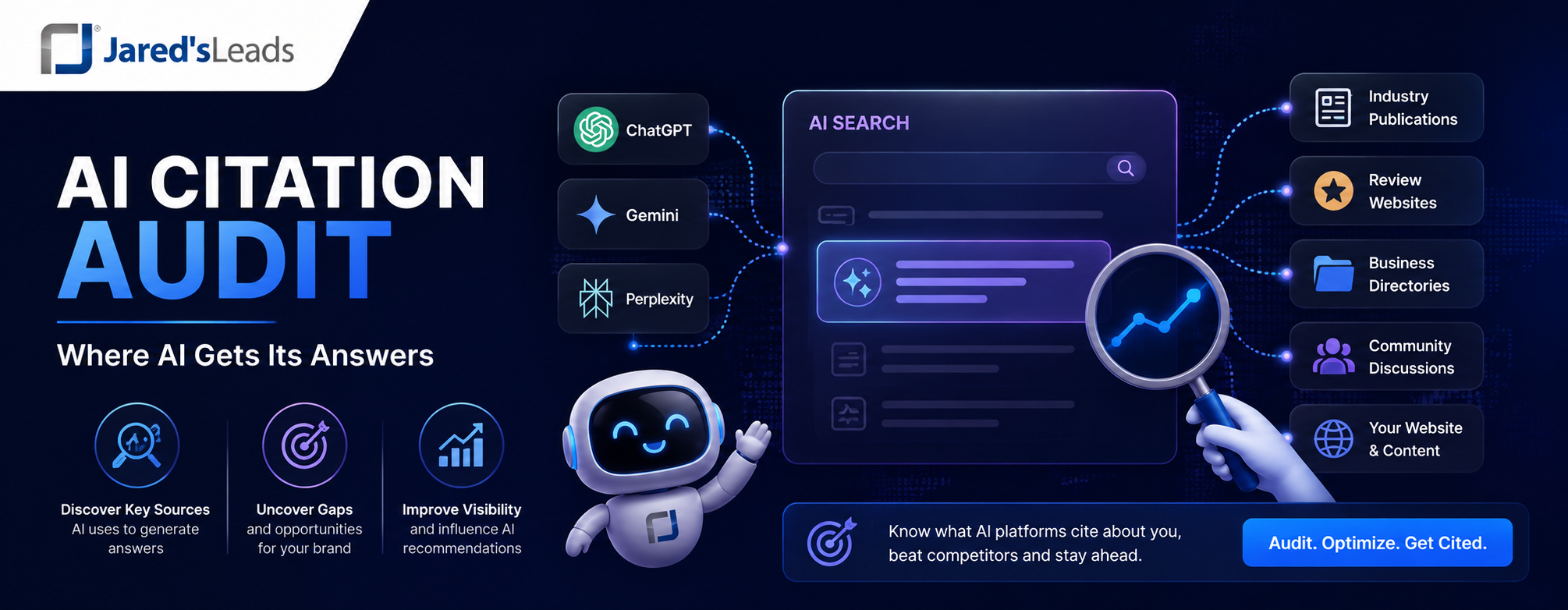
For years, businesses have measured their online visibility in fairly familiar ways. They looked at where their website ranked in Google, how much organic traffic they were receiving, how many people were clicking through to their website, and whether those visitors eventually became customers. Those numbers still matter, but the way people find information online is changing quickly.
Today, a potential customer may not begin by searching Google and working through a page of results. They may ask ChatGPT, Gemini, Perplexity, or another AI search platform a question and use the answer to decide which companies are worth considering. In many cases, they may never visit a traditional search results page at all.
That creates a different kind of visibility problem for businesses.
It is no longer enough to know whether your website ranks for a particular keyword. You also need to understand what happens when someone asks an AI platform a question about the products or services you provide.
Does your business appear? Which competitors are mentioned? What websites are being used as sources?
Is your own website being referenced, or is the information coming almost entirely from other websites? And perhaps most importantly, what can you do if your competitors are showing up and you are not?
This is where an AI citation audit becomes useful.
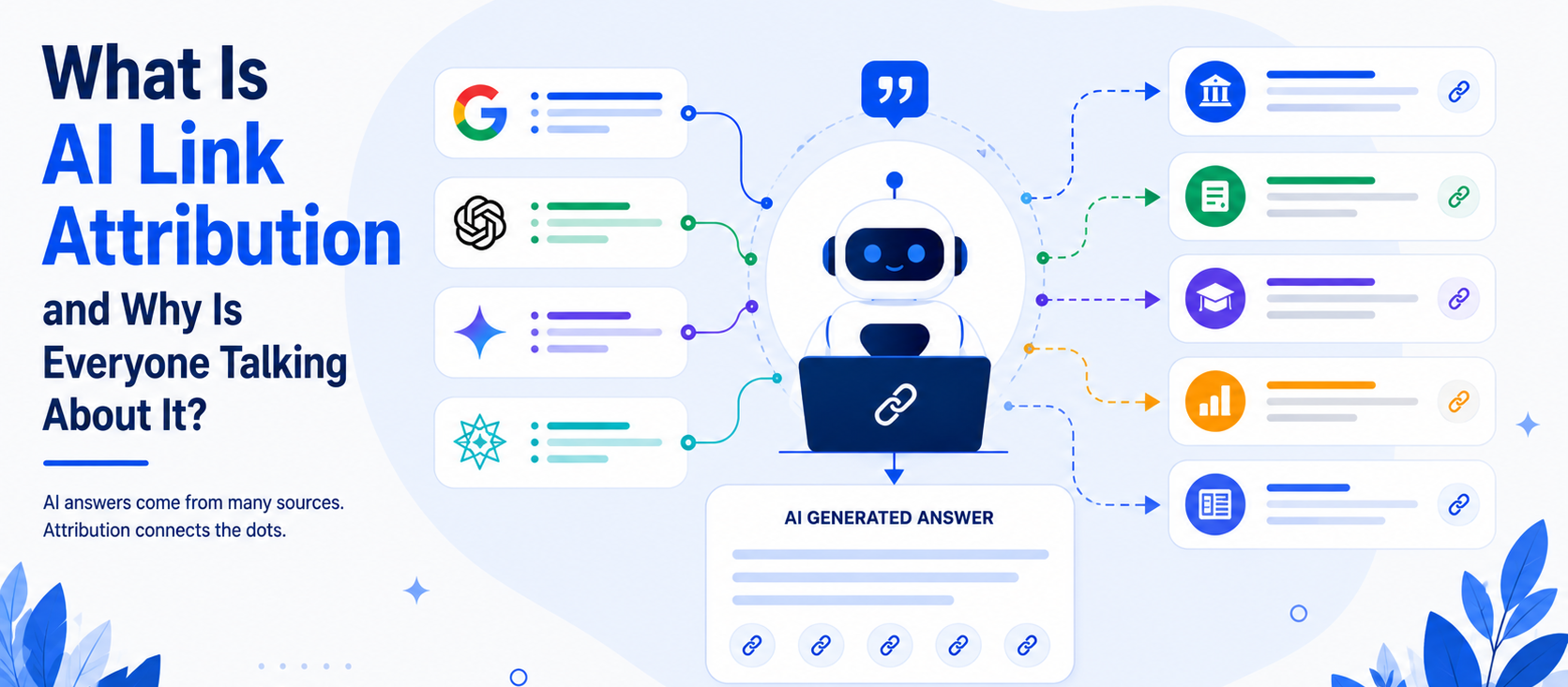
An AI citation audit looks at the sources being referenced in AI generated answers around the topics that matter to your business. It gives you a clearer picture of how your company is being represented, which sources are influencing those answers, and where there are opportunities to improve your visibility.
What Is an AI Citation Audit?
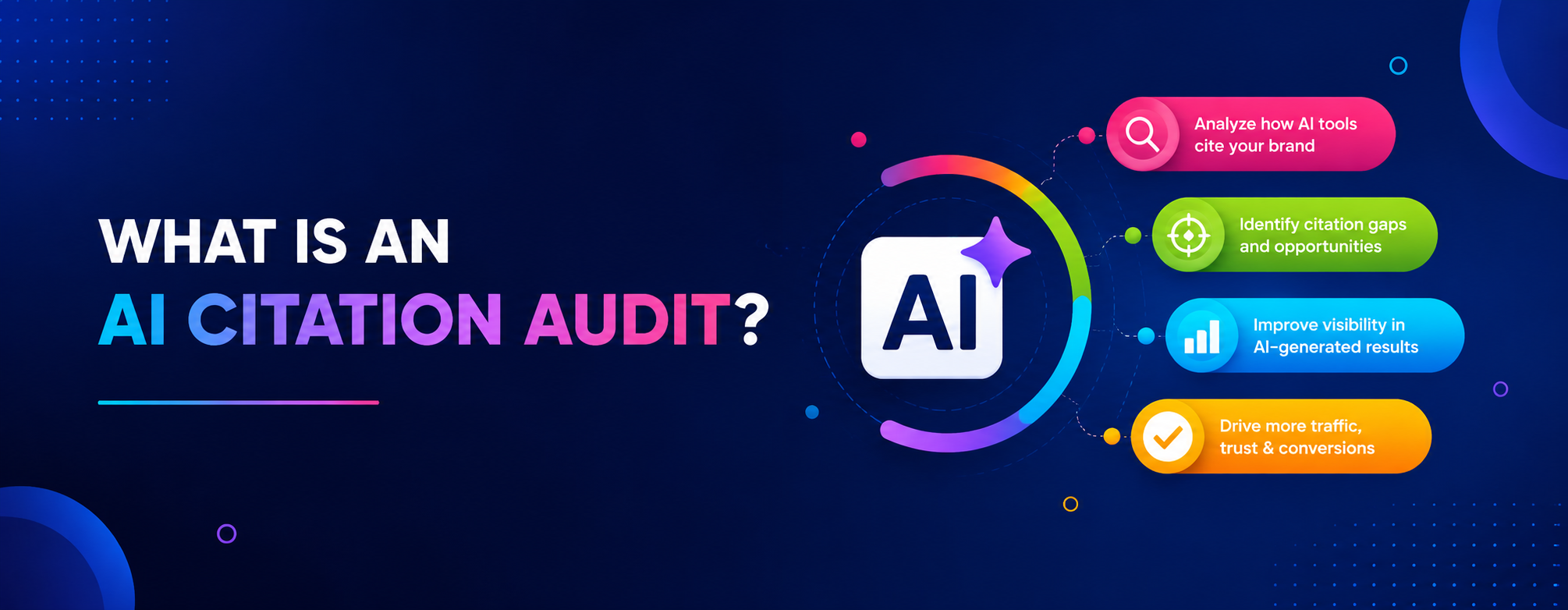
An AI citation audit is a structured examination of the websites and other sources that AI platforms use when answering questions related to your company, your industry, your products, your services, and your competitors.
The important part is that the audit should be based on realistic questions rather than a handful of random searches.
For example, a company that sells business mailing lists might want to understand what happens when potential customers ask questions such as which companies provide reliable B2B email lists, how businesses should evaluate a lead provider, where companies can purchase industry specific business data, or what makes one mailing list more accurate than another.
The questions themselves are important because they represent different stages of the buying process. Someone looking for a definition is not necessarily the same person who is comparing providers or looking for a company to purchase from.
Once those questions have been identified, the answers can be reviewed across the relevant AI platforms. You can then examine which companies are appearing, which ones are absent, and which sources are being referenced.
This gives you information that a traditional SEO report cannot provide.
You may discover that your company has strong visibility for one type of question but almost no visibility for another. You may discover that a competitor is being mentioned repeatedly because several independent websites have written about them. You may also find that an AI platform is relying on information about your company that is outdated or incomplete.
Those findings are much more useful than simply knowing that your brand appeared in one AI answer.
Why Third Party Sources Matter

One of the biggest differences between traditional search visibility and AI visibility is the importance of the broader information surrounding your company.
Your website is obviously important. It is where you explain your products and services, publish your content, describe your experience, and provide information that you want customers to see.
But your website is not the only place where information about your business exists.
A potential customer might also find your company through an industry publication, a business directory, a review website, an interview, a comparison article, a professional association, a forum, or a community discussion.
AI platforms can draw from that wider collection of information when producing an answer.
The original research behind this article found that third party sources accounted for the majority of highly cited pages across the topics examined. In one compliance related audit, roughly 80 percent of highly cited pages came from independent accounting, tax, and audit firms rather than the brand’s own website.
That finding has a practical implication for businesses.
If your competitors are being discussed by credible independent websites while your company exists almost entirely on its own website, you may have a visibility problem that publishing more blog posts will not solve.
You may need to build a stronger presence outside your own website.
That could mean earning legitimate media coverage, contributing useful expertise to industry publications, producing original research that others can reference, improving your business profiles, or becoming more involved in relevant professional communities.
The objective is not to create mentions simply for the sake of having more mentions. The objective is to make your company part of the wider conversation around the subject you want to be known for.
The Problem With Publishing More Content Just for Coverage
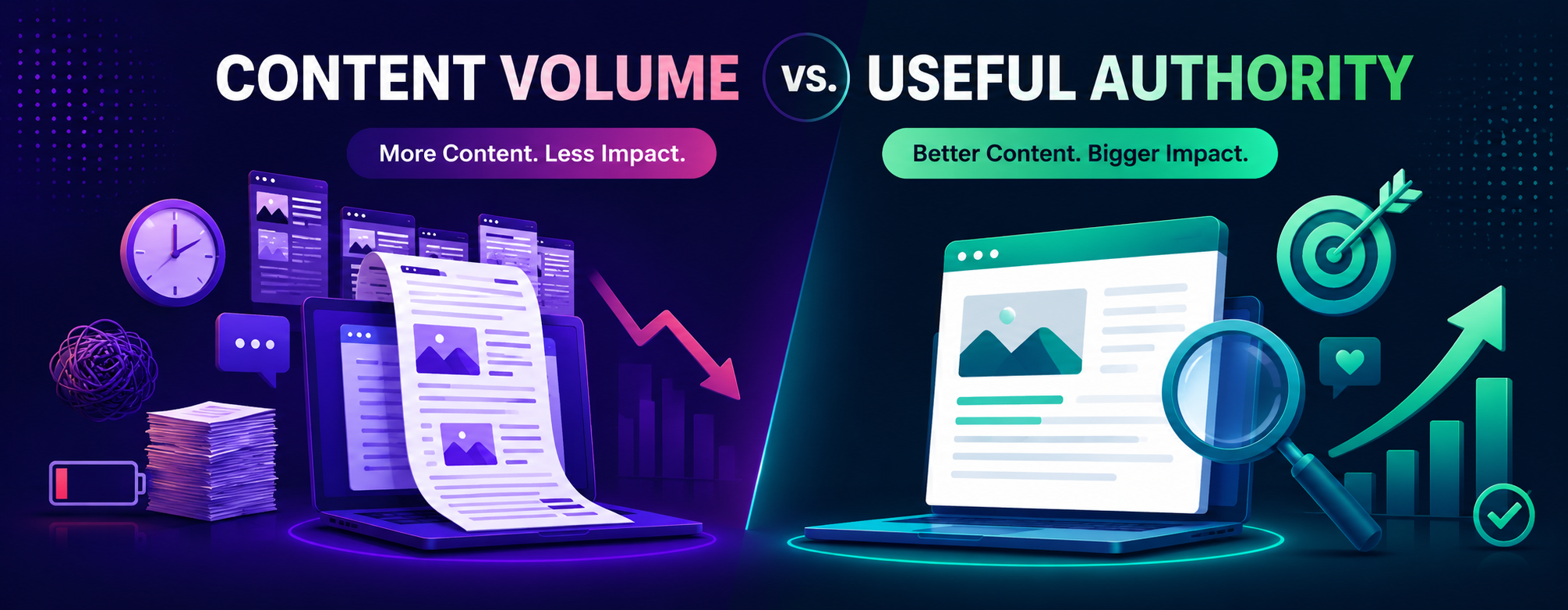
For a long time, content marketing rewarded businesses that could cover more topics.
A company could identify hundreds of keywords, create articles around them, and gradually build a large library of content. The logic was simple. More pages created more opportunities to appear in search results and bring visitors to the website.
That strategy still has value in the right circumstances, but AI search creates a problem for generic content.
AI platforms are very good at answering basic informational questions themselves.
If someone asks what email marketing is, how a CRM works, or what SEO means, an AI platform can provide a complete explanation without requiring the user to visit a particular website.
That means a page containing the same basic information as hundreds of other pages has less of a reason to be referenced.
The source article describes this as the coverage trap. Content that exists primarily to answer broad and generic questions can be absorbed into an AI answer without necessarily generating a visit to the original website.
This does not mean businesses should stop publishing content.
It means they need to be more thoughtful about what they publish.
A detailed study, a first hand case study, original research, a useful comparison, or an industry guide based on actual experience provides something that a generic article may not.
The question should not simply be, “What keyword can we write an article about?”
A better question is, “What information can we provide that would genuinely help someone understand this subject or make a better decision?”
That change in thinking can improve both traditional search performance and visibility in AI generated answers.
What Does an AI Platform Actually Cite?
The most useful part of a citation audit is often not discovering that your company is missing. It is discovering what the platforms are choosing instead.
You may find that long form industry guides are frequently referenced. You may find that independent publications appear again and again. You may find that comparison websites are influential for buying related questions, while community discussions become more important for questions about customer experiences.
Patterns begin to appear once enough questions have been tested.
The original source found that detailed educational guides, original research, comparison content, and material demonstrating first hand expertise were among the types of content that consistently earned citations.
This makes sense when you think about how a person would research a complicated decision.
If you are trying to understand a subject you know very little about, a detailed resource is more useful than a page that simply repeats the definition found everywhere else.
The same principle applies to AI platforms.
If a page contains specific information that helps explain a subject, supports a claim, compares different options, or provides useful original information, it gives the platform more substance to work with.
That is why a good content strategy should focus on depth and usefulness rather than simply trying to increase the number of pages on a website.
Three Ways to Respond to What the Audit Finds
An AI citation audit should not end with a spreadsheet showing which websites appeared in your results. The useful part comes afterward, when you decide what those findings mean for your marketing.
- If third party websites are driving most of the visibility, focus on building a stronger presence outside your own website. Look at the publications, industry websites, directories, comparison resources, and other sources that are already being referenced. If your competitors are appearing in those places and you are not, investigate legitimate opportunities to contribute expertise, provide original information, participate in industry coverage, or create resources that those publishers have a reason to reference.
- If important topics are missing from your own website, use the audit to improve your content rather than simply producing more of it. A question that customers regularly ask but that your website answers poorly could become the basis for a detailed guide, comparison, case study, research report, or useful resource. The purpose is to create something that actually fills an information gap instead of adding another generic article to an already crowded subject.
- If community discussions and user generated sources are influencing the answers, look at where your customers are having those conversations and become useful there. This does not mean filling Reddit, Quora, forums, or review sites with promotional messages. It means participating where appropriate, answering genuine questions, providing useful information, and making sure your business is represented accurately when people are discussing the problems your company solves.
These three areas are closely related, but they require different kinds of work. That is why an audit is valuable. It helps you understand whether your next investment should go toward content, third party visibility, community participation, or some combination of the three.
How Jared’s Leads Can Help You Understand Your AI Visibility
This is where the findings from an AI citation audit become much more useful for a business.
Jared’s Leads can help companies look at the questions their customers are asking and understand how their brand is appearing when those questions are asked through AI search platforms.
The process starts with the business itself.
What does the company sell?
Who is the customer?
What problems are those customers trying to solve?
Which competitors are they likely to compare?
What questions would someone ask before deciding to contact or buy from the company?
Those questions provide the foundation for looking at visibility.
The goal is not to collect thousands of meaningless searches. It is to understand the questions that actually have commercial value.
For example, a company selling consumer leads may want to know whether it appears when someone asks about new homeowner leads, insurance leads, mortgage leads, or other specific audiences. A B2B data company may want to understand what happens when buyers ask about business email lists, industry specific mailing lists, or lead providers.
Once those questions are tested, the citation information becomes much more useful.
You can see whether your company is being mentioned, which competitors are appearing, and which websites are influencing the answers.
That information can then be used to improve your broader LLM SEO strategy.
If you want to understand how Jared’s Leads approaches this broader area, the company’s Jared’s LLM SEO service provides a useful starting point. The site also has a dedicated Traditional SEO vs LLM SEO resource explaining why businesses increasingly need to consider both forms of visibility rather than treating them as completely separate marketing activities.
Understanding Your AI Citations
Once you know which sources are appearing in your AI answers, the next step is to understand what those sources mean for your business.
If the same industry publication is repeatedly cited when customers ask questions about your market, that publication is worth paying attention to. If your competitors are being discussed there while your company is absent, you have identified a potential gap. If your business is already mentioned but the information is outdated, you have identified a different problem that may require correction.
This is where a citation audit becomes more than a visibility report. It becomes a way of understanding how your business is being described across the wider internet and which sources are helping shape that description.
Jared’s Leads can use these findings as part of a broader LLM SEO strategy, helping businesses understand not only whether they appear in AI generated answers, but also what is influencing the answers and where there may be opportunities to strengthen their online presence.
From Search Position to Brand Presence

Traditional SEO taught businesses to think about position. The goal was to rank higher, receive more clicks, and bring more visitors to the website.
Those measurements still matter.
But AI search introduces another layer to the conversation.
Imagine a potential customer asks an AI platform, “What are the best companies for buying business mailing lists?”
Your company might not receive a traditional search click from that question. However, if the AI platform includes your business in its answer and explains what you offer, you have still become part of that customer’s research process.
The same thing can happen when someone asks about homeowner leads, mortgage leads, insurance data, B2B email lists, or other products and services.
The customer may never search your exact company name. They may encounter your business because the AI platform introduced it while answering a broader question.
That is why presence matters.
Traditional search gives you a ranking that you can monitor. AI generated answers can put your company into a recommendation, comparison, explanation, or buying discussion without giving you the same kind of position to track. The original source makes this distinction between traditional search position and broader AI driven presence.
For businesses, this means that the wider information surrounding the company deserves attention.
Your website matters. Your traditional SEO matters. Your content matters. But the independent sources that talk about your company matter too.
How an AI Citation Audit Can Shape Your LLM SEO Strategy
An AI citation audit should ultimately lead to better decisions.
If you discover that competitors are being cited because several respected industry publications have discussed them, your strategy should address that external visibility gap.
If you discover that your competitors have useful original research while your website contains mostly standard educational content, you may need to develop research or deeper resources of your own.
If you discover that your website is answering an important customer question poorly, that is a clear content opportunity.
And if you discover that your business is already appearing but is being described inconsistently, you may need to work on the accuracy and consistency of the information available across the web.
This is one reason LLM SEO should not be treated as a replacement for traditional SEO. The two can support each other.
Jared’s Leads already has a dedicated article discussing LLM SEO vs Traditional SEO, and its blog also covers AEO and how businesses can get mentioned by AI, as well as how to optimize a website for ChatGPT and other LLMs. Those resources can be useful next steps for businesses that want to go beyond simply measuring citations.
Frequently Asked Questions
Q.1. What is an AI citation?
An AI citation is a reference to a source that an AI platform uses when generating an answer. The source may be a company’s website, an industry publication, a directory, a review website, a community discussion, or another relevant source.
Q.2. Is an AI citation the same as a backlink?
No. A backlink is a link from another website to your website. An AI citation is a reference to a source within an AI generated answer. A third party website can provide both a backlink and information that becomes relevant to AI search, but the two measurements are different.
Q.3. Why are third party sources important?
AI platforms can use information from many places when producing an answer. If independent websites consistently discuss your competitors but rarely mention your company, that can influence how visible your business is when customers ask related questions.
Q.4. Do I need to publish more blog posts to improve AI visibility?
Not necessarily. More content can help when it addresses genuine information gaps, but publishing large numbers of generic articles is not a substitute for useful, authoritative information. An audit can help determine whether content is actually the problem.
Q.5. Can my company rank well in Google and still have poor AI visibility?
Yes. Traditional search rankings and AI visibility are different measurements. A company can have strong rankings for important keywords while being rarely mentioned when customers ask AI platforms for recommendations or explanations.
Q.6. How can Jared’s Leads help with AI citation research?
Jared’s Leads can help businesses identify the questions that matter to their customers, examine how their brand appears across AI generated answers, identify competitors and citation sources, and use those findings to inform a broader LLM SEO strategy.
Conclusion
An AI citation audit is not about replacing everything businesses already know about SEO. It is about understanding another part of the customer journey that is becoming increasingly important.
People are asking AI platforms questions that they once asked search engines. They are using those answers to research companies, compare options, understand products, and make decisions. When that happens, your business needs to be part of the information being considered.
That does not mean publishing hundreds of new articles or trying to appear in every possible AI answer.
It means understanding the questions that matter, identifying the sources that influence those answers, and finding the gaps that are preventing your business from being included.
For some companies, the answer will be better content. For others, it will be stronger third party visibility. Some businesses will need to improve their presence in industry publications and communities, while others may need to address inaccurate or incomplete information already appearing online.
The important thing is to know which problem you actually have before deciding what to do about it.
That is where an AI citation audit can provide real value.
And if the audit shows that your business needs a broader strategy for improving how it appears across ChatGPT, Gemini, Perplexity, and other AI driven search experiences, Jared’s Leads can help you take the next step through its LLM SEO services.
You can review the LLM SEO packages to see what is available, or contact Jared’s Leads to discuss your current visibility and where the biggest opportunities may be.
The question businesses should be asking is no longer only, “Where does my website rank?”
It is also, “When my potential customers ask an AI platform about the problem I solve, what does it tell them about my business, and where did that information come from?”