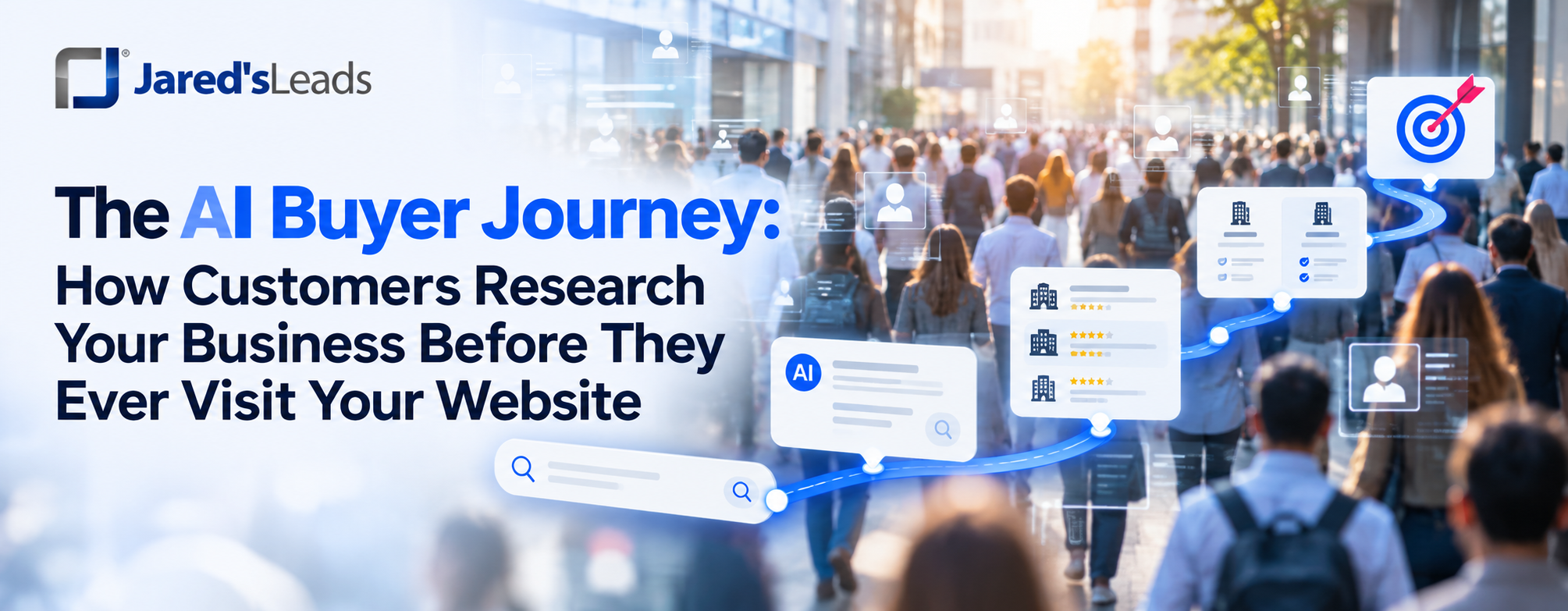
Introduction: The Buyer May Meet AI Before They Meet Your Brand
For years, the customer journey was fairly easy to understand. A potential customer recognized a need, opened Google, searched for information, visited several websites, compared providers, read reviews, and eventually contacted a business. Your website was therefore one of the central destinations in the buying process. It was where prospects learned what you offered, reviewed your experience, compared services, and decided whether your company deserved further consideration.
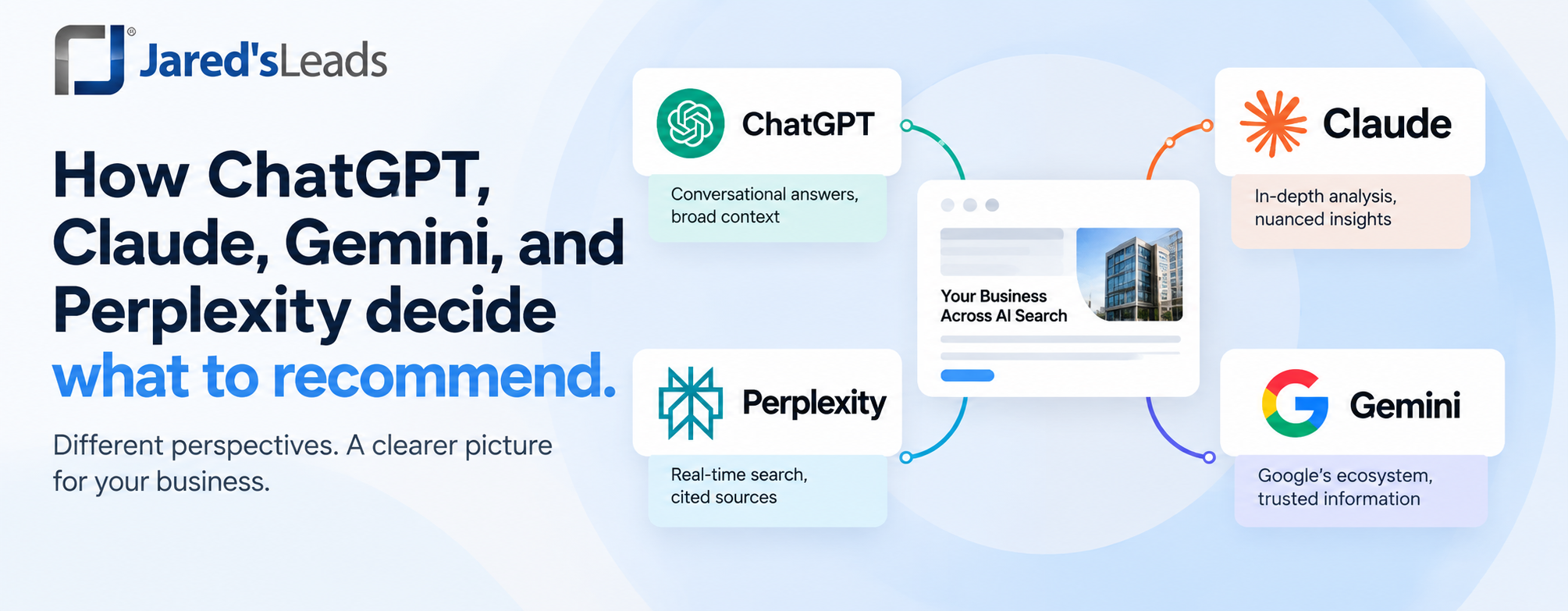
That journey is changing. A prospect can now start with ChatGPT, Gemini, Perplexity, or another AI-powered search experience and ask a detailed question before ever visiting a company website. They may ask which businesses serve a particular industry, what type of solution they need, which providers are worth considering, how several companies compare, or what they should look for before making a decision. Instead of giving the customer ten blue links and leaving the research entirely to them, AI can summarize information and present a shortlist of companies and solutions.
That creates a new visibility problem for businesses. A customer can encounter your brand, compare it with competitors, learn what other sources say about you, and develop an opinion before clicking your website. The website visit may happen later, after the buyer has already decided that your company is worth researching.
This is why you need to consider the AI buyer journey separately from traditional website traffic. Jared’s Leads’ LLM SEO services help businesses become visible when customers use AI to research and evaluate solutions, with a focus on content, entity understanding, authority, and AI visibility. The objective is not simply to attract another website visit. It is to make the business part of the conversation before that visit happens.
What Is the AI Buyer Journey?
The AI buyer journey is the process a customer follows when using AI to understand a problem, explore possible solutions, discover businesses, compare providers, evaluate credibility, and narrow down the choices available to them. Unlike a traditional search journey, it does not have to move from search engine to webpage to webpage. The buyer can remain inside a conversational interface, ask follow-up questions, change the criteria, and gradually move from broad research to a highly specific buying decision.

Imagine a business owner looking for a provider of targeted B2B lead data. The first question might be educational, such as how to build a better prospecting list. The next could ask which types of companies provide B2B lead lists. A follow-up might focus on providers that serve a particular industry or geographic market. The final questions could compare several providers and ask which one is best suited to the company’s requirements.
The customer has moved from education to discovery to evaluation without necessarily following a traditional search path. That makes visibility across different stages more important than simply ranking for the company’s own brand name.
This difference is central to the distinction between traditional SEO and LLM SEO. Jared’s Leads’ Traditional SEO vs. LLM SEO page explains that traditional SEO is heavily focused on webpages, keywords, rankings, and traffic, while LLM SEO places greater emphasis on AI recognition, entity authority, recommendations, and visibility inside AI-generated answers.
The important point is that the buyer does not necessarily begin the journey looking for your brand. They begin by looking for an answer. Your job is to make your business relevant to that answer.
Where AI Enters the Customer Journey
AI can influence the customer at almost every stage, but its role changes as the buyer becomes more informed. Early in the journey, a prospect may use AI to understand a problem, learn unfamiliar terminology, compare approaches, or determine whether a particular product or service is even appropriate. At this point, they may not be looking for a provider at all.

The discovery stage comes next. Once the buyer understands the problem, they start asking which companies, products, agencies, or service providers can help. This is where category visibility becomes important. If an AI platform is asked to recommend businesses for a specific need and your competitors appear while you do not, you may never enter the buyer’s consideration set.
Then comes evaluation. Questions become more detailed and commercial. The customer may ask about pricing, experience, industry specialization, reviews, capabilities, customer types, geographic coverage, implementation, or differences between competing providers. They are no longer just gathering information. They are trying to reduce uncertainty before spending money.
The decision stage is the most important commercially because the buyer is getting close to choosing. They may ask which company is the best fit for a particular situation or what strengths and weaknesses they should consider before moving forward.
This changing role of AI is why the broader Jared’s Leads AI visibility offering focuses on more than general brand visibility. A business needs to understand where it appears, when it appears, and whether it remains visible as the buyer’s questions become more specific. That is much more useful than knowing only whether your company appears for one broad category query.
How Customers Use AI to Discover Businesses
One of the biggest differences between traditional search and AI search is the amount of context a buyer can provide in a single question. A customer does not have to reduce the problem to two or three keywords. They can describe their business, their audience, their budget, their location, their challenge, and the result they want.

A business owner might ask, “I run a regional home-services company and need more qualified homeowners in three states. What type of lead provider should I consider?” That single question contains the buyer, the problem, the audience, the geography, and the desired outcome. A second prompt might then ask which providers appear suitable for that situation.
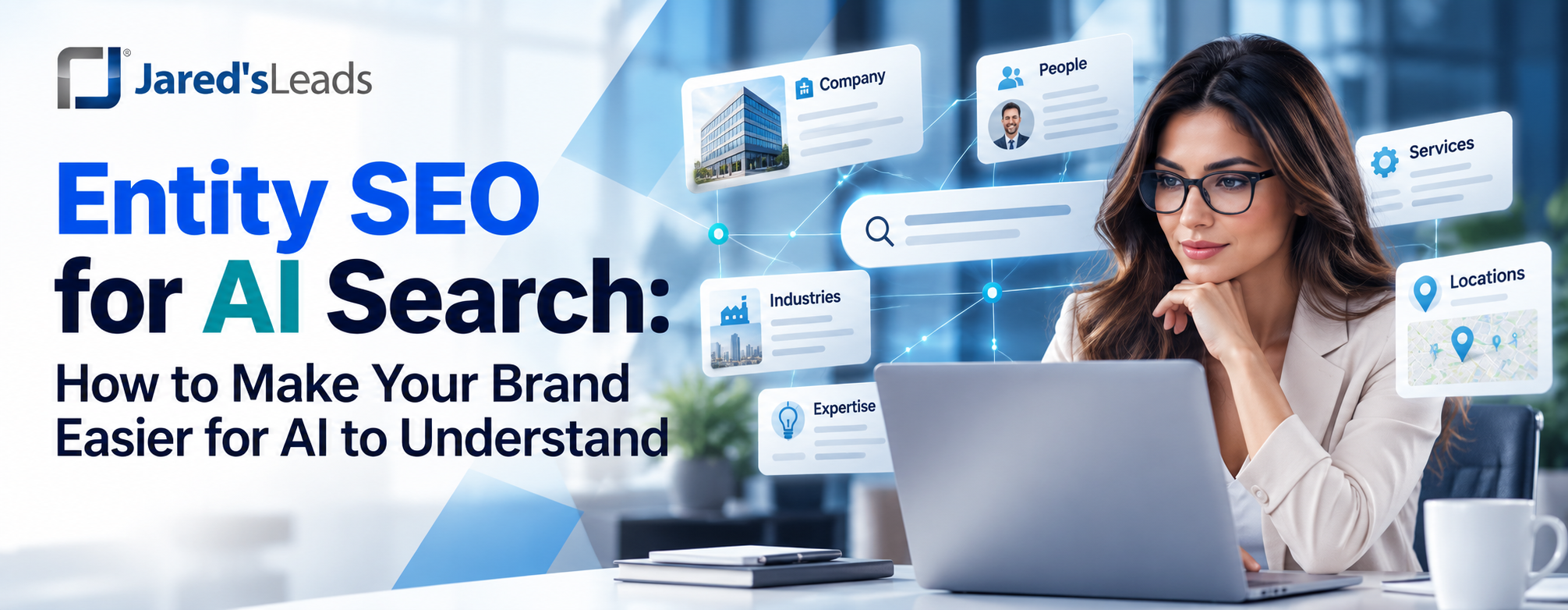
This changes what businesses need to optimize for. A company cannot rely only on being associated with a phrase such as “lead generation.” It needs a broader digital identity that makes the connection between the business, its services, its audience, its industries, and the problems it solves understandable.
That is one reason buyer-focused prompt research is valuable. Jared’s Leads’ published AI visibility framework uses the BPIQ model, which considers the Buyer, Problem, Intent, and Qualifier when designing search prompts. That approach is intended to make visibility measurement more representative of real customer situations rather than generic hypothetical searches.
For marketers, this means customer conversations can become an important source of search insight. The questions salespeople hear during calls, consultations, demonstrations, and objections are often more valuable than a generic list of keywords because they reveal what real buyers are trying to understand before they commit.
A useful AI visibility strategy therefore begins with the customer rather than the keyword database.
How Customers Compare Businesses Before Visiting the Website
Once a buyer has identified several possible providers, AI can become a comparison engine. The customer may ask which company is best for a particular industry, which provider offers the most appropriate solution, which businesses have the strongest reputation, or what separates one option from another.

This is where positioning becomes extremely important. A company that describes itself broadly as helping businesses “grow” gives an AI system very little context for distinguishing it from hundreds of other companies. A business that clearly explains its services, customers, industries, use cases, expertise, and areas of specialisation creates a much stronger picture.
Comparison can also happen without the customer’s brand knowledge. Someone who already knows your company can search for it directly. Someone who has never heard of you may instead ask AI to identify companies that can solve the problem they have described. In that situation, the AI response helps determine which businesses enter the buyer’s shortlist.
That means a company needs visibility before the branded search happens.
This is one of the reasons Jared’s Leads structures its LLM SEO packages around areas such as AI visibility, entity development, authority, content optimisation, and ongoing visibility improvement. The broader objective is to help businesses become easier for AI platforms to recognise in relevant customer situations rather than waiting until the buyer already knows the company name.
The website remains important, but it may no longer be the first place where the buyer forms an opinion about the business.
The Questions Customers Ask Before They Visit Your Website
Some of the most commercially important questions do not contain the company name at all. A prospect may ask how to solve a specific business problem, what type of provider they need, what a reasonable price looks like, which options are worth considering, what mistakes they should avoid, or how two solutions compare. Those questions reveal the actual decision process.
Before a buyer chooses a provider, they usually need to reduce uncertainty. They want to understand the problem, identify realistic options, determine which criteria matter, and decide what would make one provider more appropriate than another. AI can now play a much larger role in that research.

This means content planning should begin with real buyer questions. A strong content strategy can include service pages, industry resources, educational guides, comparison content, use cases, pricing information, FAQs, and objection-focused resources. The goal is not to publish hundreds of articles. The goal is to build useful information around the questions that influence the buyer’s decision.
Jared’s Leads’ LLM SEO services take a similar buyer-focused approach by building visibility strategies around contextual questions rather than relying entirely on broad generic prompts. Its published framework specifically emphasizes the difference between generic queries and prompts that reflect a realistic buyer, problem, intent, and qualifier.
This also gives businesses a practical way to find content gaps. If sales teams repeatedly hear the same question and there is no strong resource answering it that may represent both a content opportunity and an AI visibility opportunity.
Why Reviews, Mentions, Citations, and Third-Party Sources Matter
Your website is only one source of information about your company. A potential customer may also encounter reviews, business directories, industry publications, professional profiles, interviews, customer stories, social profiles, or other independent references while researching you.

Those sources can matter because they provide context outside your own marketing claims. A company can describe itself as experienced, specialised, or highly regarded, but buyers naturally place more weight on signals that do not originate entirely from the company itself.
The same principle applies to AI search. AI systems can use information from multiple sources when constructing answers, comparisons, and recommendations. That does not mean every mention has equal value. Relevance, credibility, context, and consistency matter more than simply accumulating references.
Jared’s Leads’ AEO service emphasises areas such as authority signals, consistent brand information, structured information, citations, and content as parts of establishing a stronger presence in AI-generated answers. Its published guidance also recommends building trust through credible third-party sources rather than treating mentions as a simple volume exercise.
This is particularly relevant when a customer is comparing providers. If the information on your website says one thing but important third-party sources describe your company very differently, the overall picture becomes harder to understand. A consistent external footprint can help reinforce what the business actually does and the expertise it genuinely has.
The objective is not to appear everywhere. It is to make sure the places where potential customers are likely to research you tell a credible and consistent story.
The Decision-Stage Visibility Gap
Being visible during general research is useful, but it does not necessarily mean you are visible when a buyer is ready to choose.
A business may appear when someone asks a broad question about its category and disappear when the question becomes more specific. The buyer may move from “What are the best lead-generation options?” to “Which provider is best for a regional home-services company that needs homeowner leads in three states?” and suddenly the companies appearing in the response have changed.

This is the decision-stage visibility gap.
It matters because decision-stage questions are much closer to revenue. They represent the point at which the customer is narrowing the list and deciding which providers deserve further investigation.
Jared’s Leads’ published AI visibility research identifies decision-stage visibility gaps as an important issue. Its analysis explains that some brands can perform well in broad category searches while having much weaker visibility when potential buyers are actively comparing providers or preparing to make a purchasing decision.
Closing that gap requires content and authority that remain useful as the buyer gets closer to choosing. Detailed service explanations, industry pages, comparison resources, use cases, pricing guidance, customer evidence, FAQs, and content addressing objections can all contribute to that decision-stage experience.
An AI visibility audit from Jared’s Leads can help businesses investigate where visibility is strong, where it weakens, which competitors appear instead, and which buyer situations require greater attention. The current contact page specifically positions the audit around understanding AI visibility across AI and search platforms.
How to Build Content for Every Stage of the AI Buyer Journey
A strong AI-search content strategy follows the questions customers ask as they move through the journey. Awareness content should help the buyer understand the problem, terminology, market, and available approaches. At this stage, the focus is primarily education, although the content still contributes to how the business is associated with the subject.

Discovery content should help the customer understand the available solutions and the types of providers that can deliver them. Service pages, industry pages, guides, and use cases become more important because the buyer is beginning to identify what type of company can help.
Evaluation content needs to answer practical questions. Buyers may want comparisons, costs, implementation considerations, risks, provider-selection criteria, or explanations of how different approaches work. These resources can help the customer build a shortlist without requiring every answer to become a sales pitch.
Decision-stage content should support confidence. Case studies, detailed service information, clear FAQs, customer evidence, pricing explanations, and a straightforward next step can help convert the interest developed earlier in the journey.
Jared’s Leads’ LLM SEO packages bring content optimisation together with entity work, authority development, and AI visibility measurement. The important principle is that content should not be created simply because a keyword has search volume. It should exist because it answers a question that matters to the buyer and strengthens the business’s relevance within the journey.
The best content strategy is therefore not necessarily the largest one. It is the one that covers the important questions thoroughly and connects those answers into a coherent picture of the business.
How Jared’s Leads Can Help You Show up across the AI Buyer Journey
The AI buyer journey creates a measurement problem as well as a content problem. Website analytics can tell you what happened after someone arrived on your site, but they cannot fully explain what happened while that person was researching your company inside an AI platform.
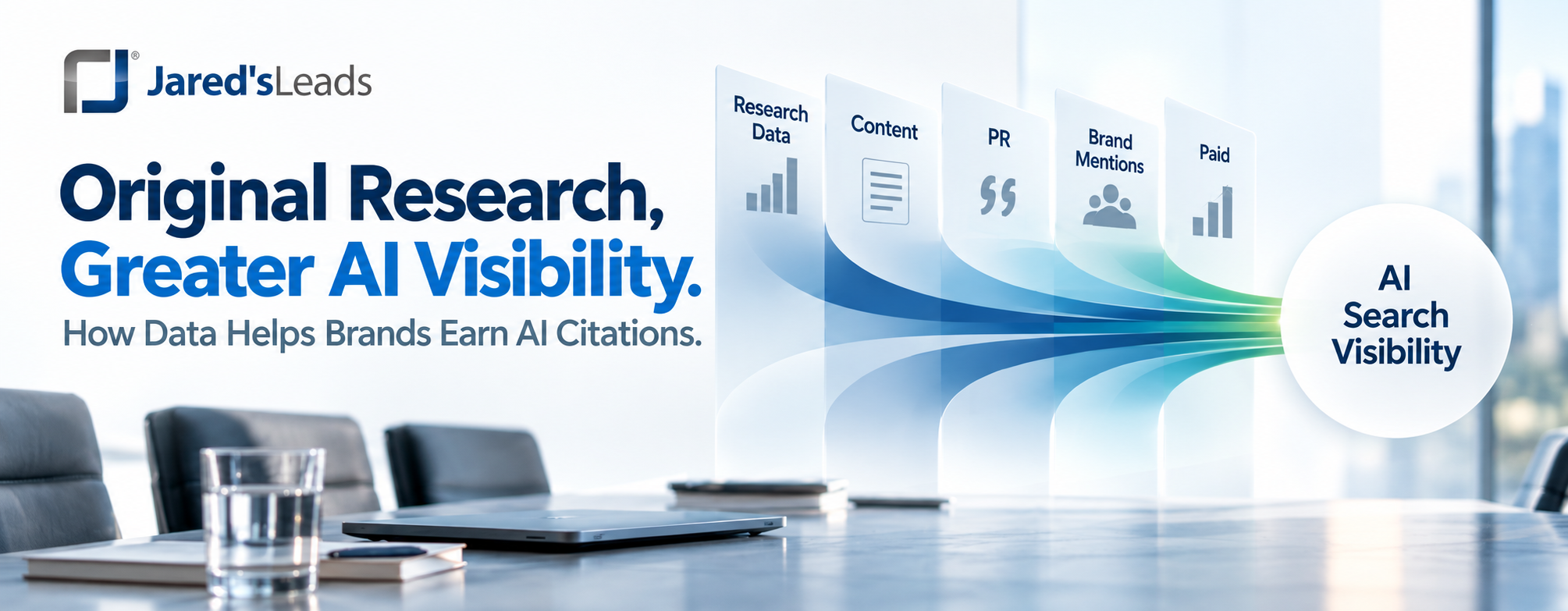
Jared’s Leads approaches this problem by combining buyer-focused prompt research with AI visibility measurement, content optimisation, entity development, authority work, and citations. Its LLM SEO offering is built around the idea that businesses need to be discoverable when customers are asking questions and comparing solutions, not only when prospects already know the brand.

The process starts with understanding the buyer. What does the customer look like? What problem are they trying to solve? What would make one solution more attractive than another? What qualifiers affect the final decision? These questions help create realistic AI-search scenarios.
Those scenarios can then be tested across relevant AI platforms. The business can measure whether it appears, how it is described, which competitors appear, what sources are being cited, and where visibility changes as the buyer moves closer to a decision.
The next stage is addressing the gaps. If a competitor is visible because it has stronger authority signals, the solution may require broader external work. If the company is missing from industry-specific questions, deeper topical or service content may be needed. If the brand is being described inconsistently, entity and information consistency may need attention.
Jared’s Leads also provides an AI Visibility Audit through its contact process, giving businesses a practical way to establish a baseline before deciding which areas deserve investment. The current contact page specifically describes the audit as a way to understand how visible a business is across AI and search platforms.
The objective is not to force an AI platform to mention a company. It is to build a stronger, clearer, and more credible digital presence so the business has a better chance of being understood and included when relevant buyers ask relevant questions.
Frequently Asked Questions
Q.1. What is the AI buyer journey?
The AI buyer journey is the process of using AI-powered search and conversational tools to research a problem, explore solutions, discover providers, compare options, evaluate credibility, and narrow down purchasing choices.
Q.2. Why does the AI buyer journey matter if customers still visit my website?
The website still matters, but it may not be the first place where customers encounter your business. AI can influence which companies enter the buyer’s consideration set and what the buyer learns about those companies before visiting their websites.
Q.3. What kinds of questions do buyers ask AI before purchasing?
Questions can include educational searches, problem-specific questions, provider recommendations, comparisons, pricing questions, reviews, use cases, and decision-stage prompts containing specific requirements or qualifiers.
Q.4. Why is decision-stage visibility important?
Decision-stage visibility matters because those searches are much closer to a purchase decision. A business that appears during general research but disappears when customers compare providers may have good awareness but weak commercial visibility.
Do reviews and third-party mentions matter for AI search?
They can contribute to the broader information available about a company. Relevant and credible third-party sources can reinforce information about expertise, reputation, services, and customer experience.
Q.5. How should I create content for AI search?
Start with real customer questions and organize content around problems, industries, services, use cases, comparisons, objections, and decision criteria. The goal is to build connected, useful information instead of isolated keyword pages.
Q.6. How can I measure my AI buyer-journey visibility?
Create realistic buyer-focused prompts and test them regularly across the AI platforms relevant to your customers. Track brand mentions, competitors, source citations, descriptions, and changes between broad research and decision-stage queries.
Q.7. Can Jared’s Leads help with the AI buyer journey?
Yes. Jared’s Leads currently provides LLM SEO and AI visibility services covering buyer-focused research, entity development, content optimisation, authority signals, citations, and visibility measurement.
Final Takeaway

The first meaningful interaction a buyer has with your business may happen before that buyer ever visits your website.
They may ask an AI platform to explain a problem, identify possible solutions, recommend providers, compare businesses, or determine which option best fits their particular circumstances. By the time they reach your website, they may already know your company, have compared you with competitors, and have formed an initial opinion based on what AI showed them.
That changes the role of visibility.
A business cannot rely entirely on being found after a customer already knows its name. It needs to be discoverable while the customer is still researching, comparing, and deciding. As the buyer moves closer to a purchase, the questions become more specific, which makes decision-stage visibility particularly important.
The strongest strategy is therefore not to create content simply because a keyword has search volume. It is to understand the questions buyers ask throughout the journey and build useful, credible information around those questions.
That means strengthening service pages, building topical depth, clarifying entities and relationships, maintaining consistent business information, developing credible third-party authority, and measuring how AI platforms actually represent your brand.
The goal is bigger than earning a click. You want your brand to be part of the conversation that helps the customer decide where to click.
And in an AI-driven discovery environment, that conversation may begin long before the customer ever reaches your website.