The Black Box Is Finally Opening
For decades, search engine optimization followed a familiar formula. Businesses created content, optimized pages around relevant keywords, earned backlinks, and monitored rankings inside Google Search Console. Success was measured through metrics such as impressions, clicks, click through rates, and average position. While the algorithms evolved over time, the way marketers measured performance remained largely unchanged.
Then generative AI arrived.
The introduction of Google AI Overviews, AI Mode, and conversational search experiences fundamentally changed how people interact with search engines. Instead of displaying a list of ten blue links, Google increasingly began delivering complete answers generated from multiple sources across the web. Users could find what they needed without clicking through to several different websites, creating a noticeable shift in how traffic flowed across the internet.
Businesses immediately started asking difficult questions. Was their content being used to generate these AI responses? Were their websites becoming more visible inside Google’s AI experiences, or were competitors being referenced instead? More importantly, if AI was changing how people searched, how could success be measured when the traditional metrics no longer told the full story?
Until recently, there were no answers.
Website owners could only speculate. Some noticed declining click through rates despite maintaining strong rankings. Others observed changes in traffic patterns without understanding whether AI generated answers were helping or hurting their visibility. SEO professionals developed theories, publishers debated the future of search, and businesses invested in new optimization strategies, but everyone was working without direct evidence.
Google’s latest update changes that.
With the launch of dedicated AI performance reporting in Google Search Console, businesses can now begin measuring how often their content appears within Google’s AI powered search experiences. While the current release is only the first step, it represents one of the most significant developments in search measurement since Google Search Console became an essential tool for marketers.
The era of guessing how AI search works is slowly coming to an end.
Google Has Created an Entirely New Performance Metric
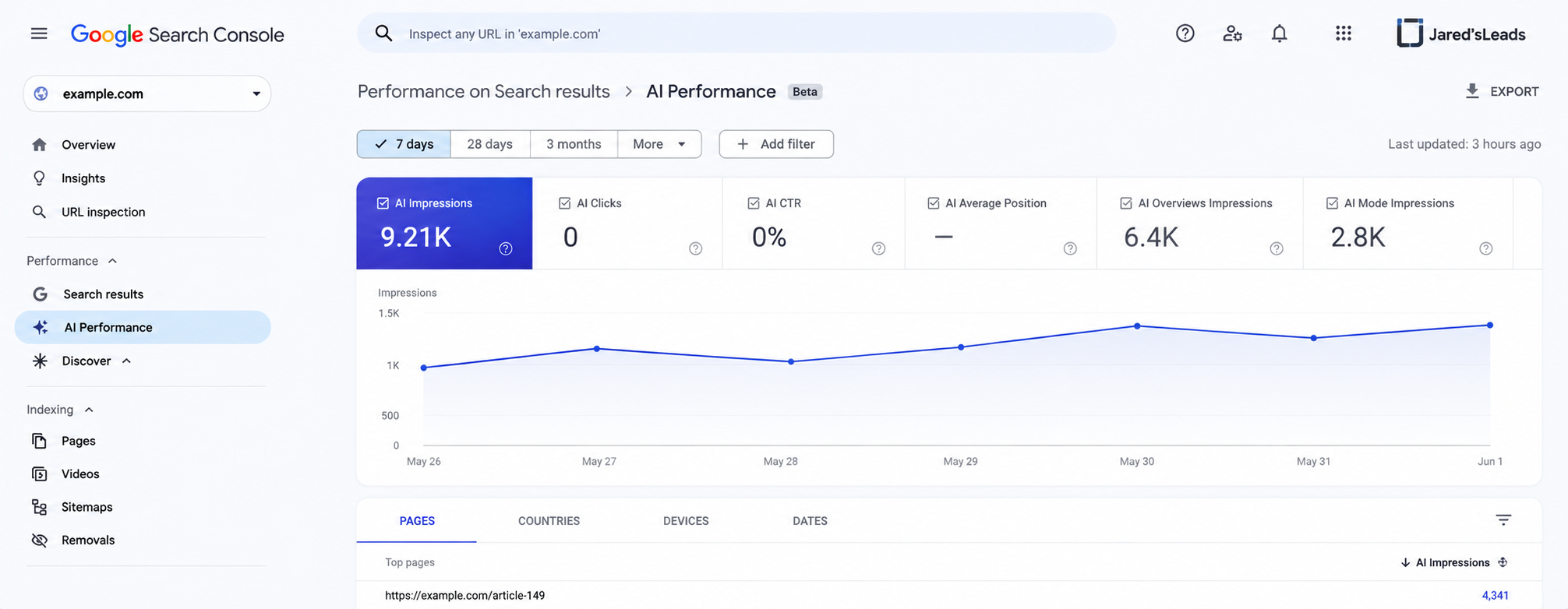
The introduction of AI reporting inside Google Search Console is much more than another dashboard update. It represents Google’s acknowledgment that AI powered search has become a distinct discovery channel, one that deserves its own measurement framework rather than being grouped together with traditional organic search.
Historically, every impression reported in Search Console referred to a page appearing somewhere within Google’s standard search results. Whether a user clicked or not, marketers understood what those impressions represented. AI search, however, works very differently.
When someone asks Google a complex question today, the search engine may generate a comprehensive response before showing any traditional search listings. That response is created by evaluating information from multiple trusted sources, selecting the most relevant facts, and presenting them in a conversational format. While users can still explore supporting websites, the experience is fundamentally different from scrolling through a page of search results.
This shift has created an entirely new type of visibility.
Instead of asking, “Does my page rank for this keyword?” businesses must now ask a different question:
“Did Google’s AI choose my content as one of the sources used to answer the user’s question?”
That distinction is incredibly important.
Being selected as a source inside an AI generated response reflects more than keyword relevance. It suggests that Google’s systems considered the content reliable, accurate, and authoritative enough to contribute to the final answer. In many ways, this represents a stronger signal of trust than simply appearing somewhere within the organic rankings.
The new reporting gives businesses their first opportunity to measure that visibility directly.
What Exactly Did Google Announce?
In June 2026, Google introduced dedicated Generative AI Performance Reports within Google Search Console, providing website owners with a separate view of how their content performs across Google’s AI powered experiences. Rather than combining these impressions with standard organic reporting, the new dashboard isolates AI visibility, making it possible to understand how frequently individual pages appear within AI generated responses.
The report currently tracks five primary dimensions:
- AI impressions
- Individual pages
- Countries
- Devices
- Dates
Although the initial rollout began with a limited group of UK based website owners, Google has confirmed that broader availability is planned. The report includes data beginning from May 18, 2026, allowing early adopters to establish performance benchmarks as AI search continues to evolve.
Equally significant is Google’s decision to introduce a dedicated control allowing publishers to opt out of having their content used within AI generated search experiences without negatively affecting their traditional organic rankings. This separation reinforces an important message from Google: AI visibility and traditional search visibility are now considered two different products with independent reporting and controls.
That distinction should not be overlooked.
For years, SEO professionals have treated search visibility as a single metric. Google’s latest update effectively signals that businesses should begin thinking about visibility in two parallel ways. One reflects where a page ranks within traditional search results. The other reflects how often Google’s AI systems trust that same content enough to include it in generated answers.
Those are not always the same thing.
Why This Announcement Matters Beyond Search Console
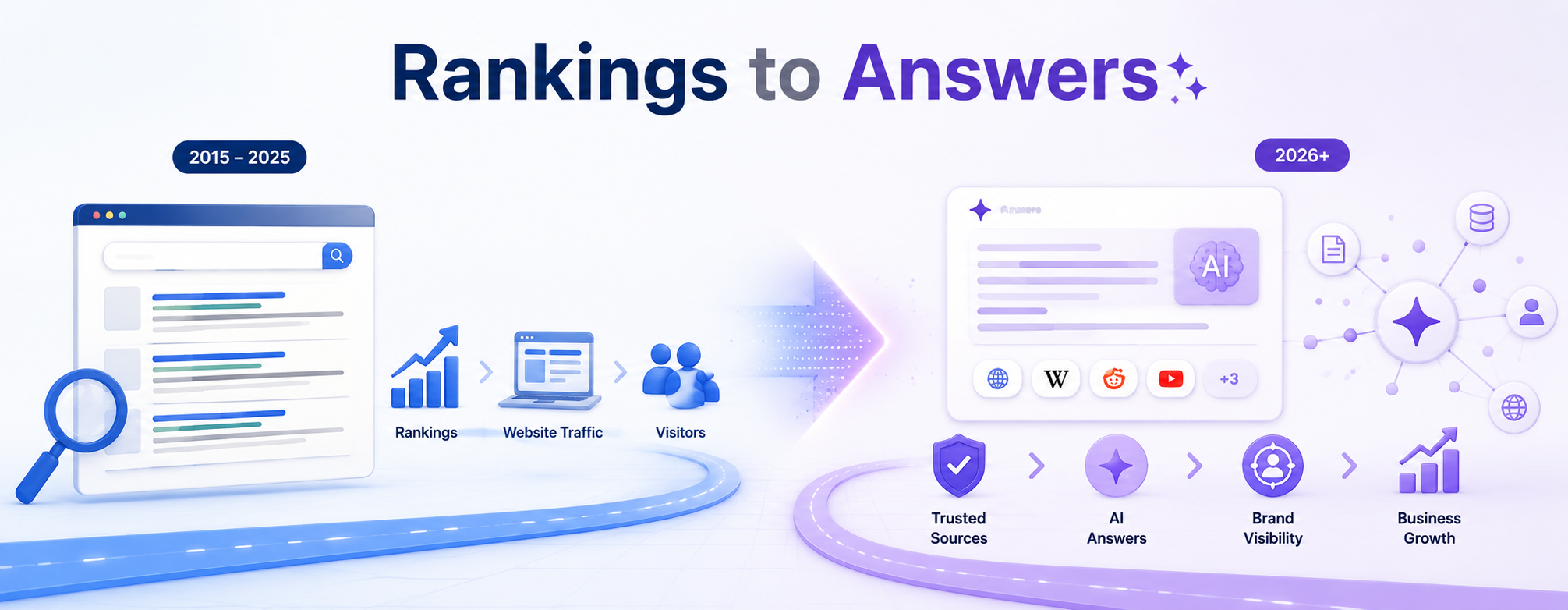
It would be easy to view this update as simply another reporting enhancement, but doing so would miss its broader significance. Google is not just adding new metrics. It is acknowledging a fundamental change in how information is discovered online.
For decades, publishers competed for rankings because rankings determined visibility. If your page appeared first, you captured the majority of clicks. Every SEO strategy, from keyword research to link building, was built around improving that position.
AI search changes the objective.
When users receive complete answers directly within Google’s interface, visibility is no longer determined solely by ranking first. Instead, it depends on whether your content contributes to the answer itself. A page may continue to rank well organically while receiving little or no exposure within AI generated responses. Conversely, another page might become an important reference for Google’s AI despite generating relatively modest organic traffic.
This creates a new competitive landscape where authority, accuracy, topical expertise, and content quality become even more influential than before.
Businesses can no longer assume that strong rankings automatically translate into strong AI visibility. Likewise, improving AI visibility requires more than simply targeting additional keywords. It demands content that answers real questions comprehensively, demonstrates expertise, and provides information that Google’s systems consider trustworthy enough to reference.
This is precisely why conversations around LLM SEO have accelerated over the past two years. As AI powered search becomes more prominent, businesses need strategies that help them earn recognition not only from search algorithms but also from the language models generating answers for millions of users every day.
Google’s latest reporting does not create that reality.
It simply gives businesses their first meaningful way to measure it.
Understanding Google’s New AI Performance Data
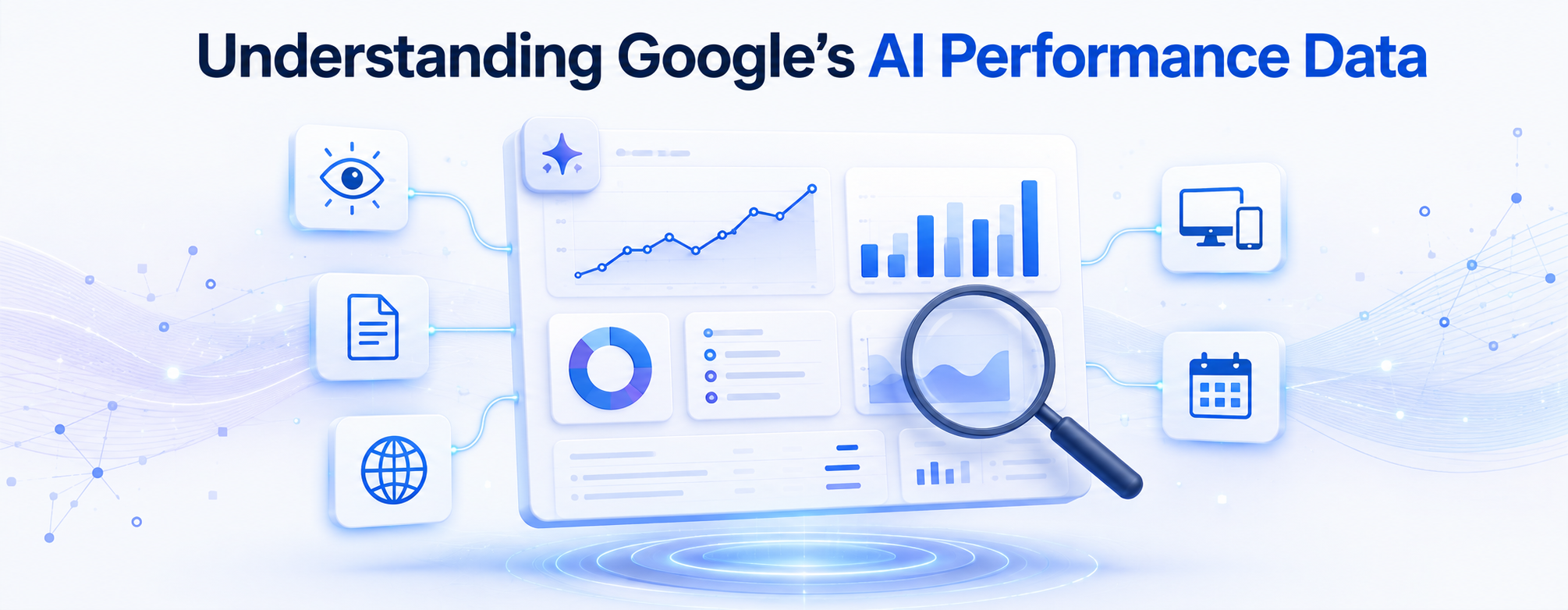
Google’s new AI Performance Report gives businesses their first dedicated view into how often their content appears across AI powered search experiences. While the feature is a major step forward, it is important to understand what the data does and does not tell you.
At launch, the report focuses on AI impressions rather than traditional SEO metrics. It shows how often your pages appear within AI Overviews, AI Mode, and other AI powered search features, along with supporting breakdowns by page, country, device, and date. However, it does not currently include clicks, click through rate, average position, or query level reporting.
For marketers accustomed to measuring performance through traffic and conversions, this may initially feel like an incomplete picture. But AI search works differently from traditional search.
Unlike a standard search results page, Google’s AI experiences are designed to answer questions directly. A user may receive the information they need without clicking through to any website, meaning impressions become an important indicator of visibility even when traffic does not immediately follow. Rather than measuring how many people visited your website, AI impressions measure how often Google’s generative systems considered your content valuable enough to support an answer.
That distinction is significant. An AI impression is not simply another search impression. It suggests that Google’s AI recognized your content as relevant, reliable, and authoritative within the context of a user’s query.
Reading AI Impressions the Right Way
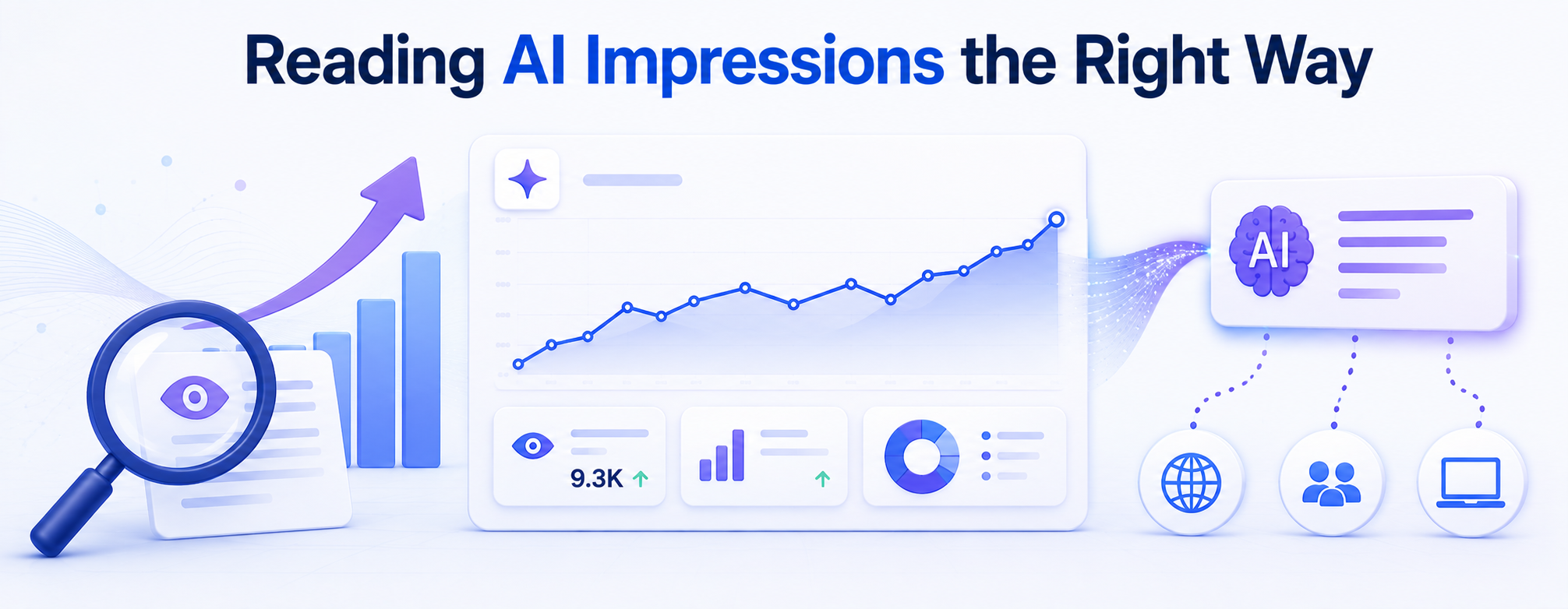
AI impressions should not replace your existing SEO metrics. Instead, they should complement them.
The most valuable insights come from comparing AI impressions with your traditional Search Console data. Pages that generate strong organic traffic while also earning consistent AI impressions are likely your most authoritative content assets. They perform well in both traditional search and AI driven experiences, making them valuable long term resources for your business.
On the other hand, pages with strong rankings but little AI visibility may benefit from additional improvements. Strengthening topical depth, improving content structure, adding supporting evidence, and reinforcing your brand’s authority can all increase the likelihood of being referenced by AI systems.
As Google’s reporting evolves, additional metrics will almost certainly be introduced. Until then, businesses should view AI impressions as an early indicator of authority rather than a replacement for clicks or rankings. They provide a new lens through which to evaluate content performance and offer valuable insights into how Google’s AI understands and trusts your website.
Why This Matters for Businesses and the Growing Importance of LLM SEO
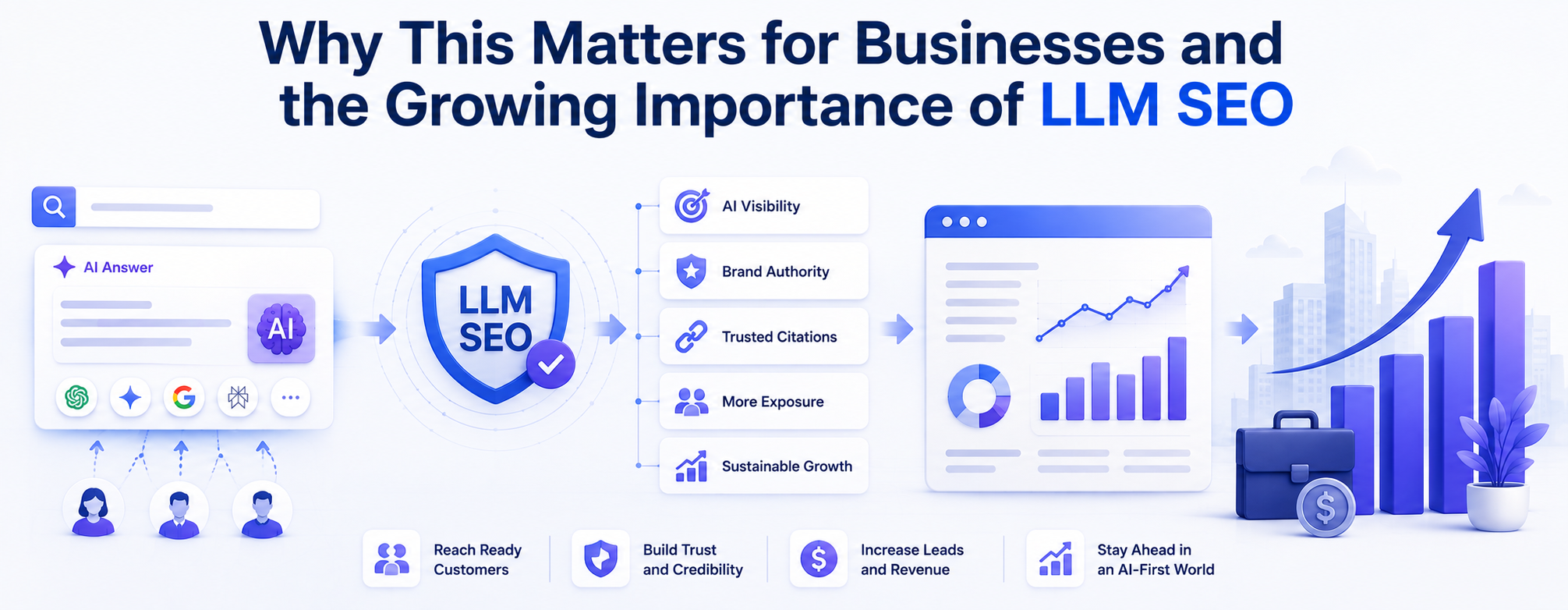
Google’s new AI Performance Report does more than introduce another reporting feature. It confirms what many marketers have anticipated for the past two years: AI visibility is becoming a measurable marketing channel.
As AI powered search continues to evolve, businesses need to rethink how they approach content creation and search optimization. Ranking on the first page of Google is still valuable, but it is no longer the only objective. Increasingly, brands must also earn the trust of AI systems that generate answers for millions of users every day.
This is where LLM SEO (Large Language Model Search Optimization) comes in.
Unlike traditional SEO, which focuses primarily on improving rankings within search engine results, LLM SEO is designed to help businesses become trusted sources across AI platforms such as Google AI, ChatGPT, Gemini, Perplexity, and others. It focuses on building the authority, consistency, and digital footprint that language models rely on when deciding which brands and content to reference.
That means looking beyond keywords and backlinks alone. Businesses need well structured content that answers real customer questions, strong entity recognition, consistent citations across trusted websites, accurate business information, and a reputation that reinforces expertise within their industry.
How Jared’s Leads Helps Businesses Improve AI Visibility

At Jared’s Leads, we’ve embraced this shift by developing LLM SEO strategies that align with how modern AI search works. Our goal is not just to improve rankings, but to help businesses become credible sources that AI systems recognize and reference.
Our approach includes:
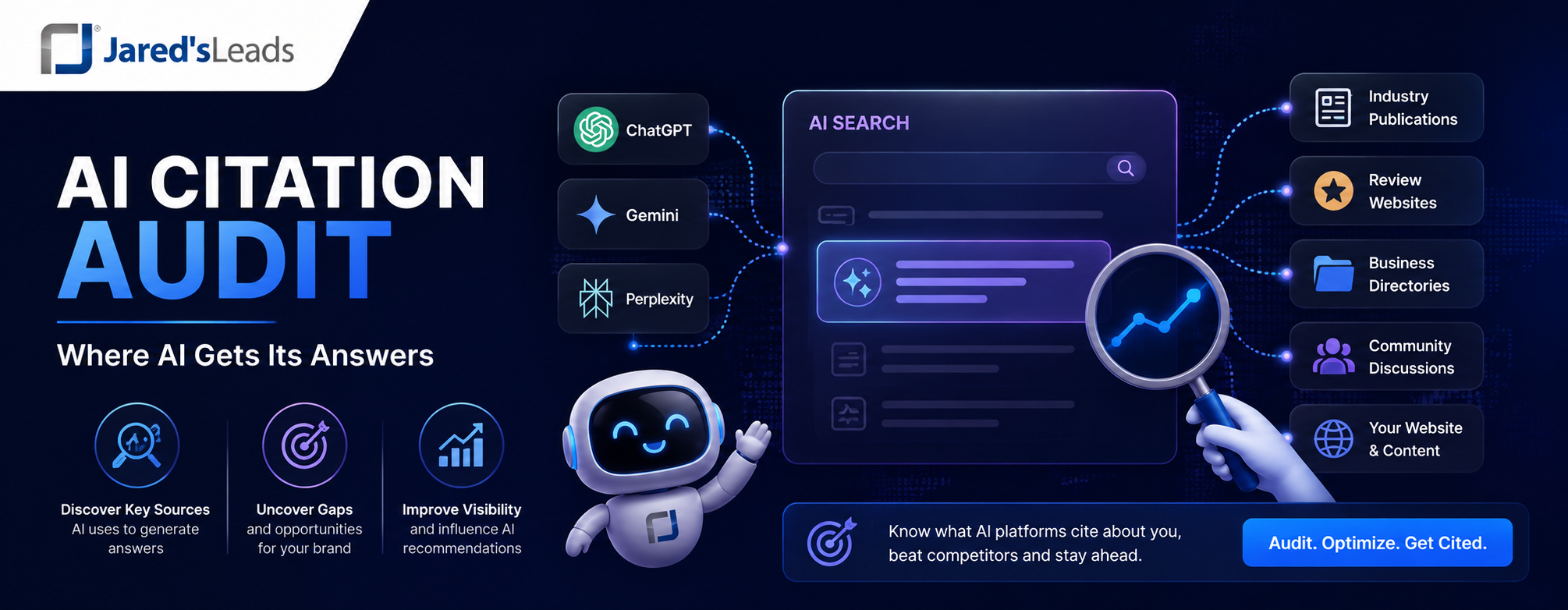
- AI Visibility Audits to understand how your brand appears across leading AI platforms.
- Entity Optimization to strengthen your digital identity and improve how AI systems understand your business.
- Citation Building to create consistent, trustworthy signals across authoritative websites.
- AI Focused Content Strategies that answer real customer questions with clarity, depth, and accuracy.
- Digital Footprint Expansion to increase your brand’s presence beyond your own website.
These efforts work together to improve the signals that AI systems use when evaluating which businesses deserve to be included in generated responses.
Preparing for the Future of Search
Google’s latest announcement should be viewed as the beginning rather than the finish line. AI reporting will continue to evolve, and it is reasonable to expect more detailed metrics over time, including clicks, queries, and additional performance insights.
Businesses that begin measuring AI visibility today will be in a much stronger position as those capabilities expand. More importantly, they will already be investing in the type of high quality, authoritative content that both users and AI systems value.
The future of search is unlikely to be defined by rankings alone. It will be shaped by trust, expertise, and the ability to provide reliable information wherever people choose to search.
Conclusion
The introduction of AI Search reporting in Google Search Console is one of the most significant developments in SEO in recent years. For the first time, businesses can begin measuring how often their content contributes to AI generated answers, opening the door to a new way of evaluating digital visibility.
While the current report is limited to impressions, it marks an important step toward understanding how AI systems discover, assess, and reference online content. As search continues to evolve, businesses that combine strong traditional SEO with a forward looking LLM SEO strategy will be better positioned to maintain visibility and authority.
At Jared’s Leads, we believe the future belongs to businesses that are not only easy to find but also trusted enough to be cited. By helping organizations strengthen their digital authority through AI visibility audits, entity optimization, citation building, and strategic content development, we help prepare brands for the next generation of search.
The question is no longer just “Where does your website rank?”
The more important question is:
“When AI answers your customers’ questions, is your business part of the answer?”
Frequently Asked Questions
Q. 1. What is Google’s AI Performance Report?
It is a new report in Google Search Console that shows how often your content appears in AI powered search experiences such as AI Overviews and AI Mode.
Q. 2. Does the report include clicks and CTR?
No. The current version only reports AI impressions, along with page, country, device, and date level data.
Q. 3. Why are AI impressions important?
AI impressions indicate that Google’s AI systems selected your content as a source while generating an answer, making them a useful indicator of authority and visibility.
Q. 4. What is LLM SEO?
LLM SEO is the process of optimizing your website and digital presence so AI platforms can better understand, trust, and reference your content.
Q. 5. Is LLM SEO replacing traditional SEO?
No. Traditional SEO remains essential, but LLM SEO complements it by improving visibility across AI driven search experiences.
Q. 6. How can businesses improve AI visibility?
Businesses should focus on creating authoritative content, strengthening entity recognition, earning trusted citations, maintaining accurate business information, and expanding their digital footprint.
Q. 7. How does Jared’s Leads help?
Jared’s Leads provides LLM SEO services that include AI Visibility Audits, Entity Optimization, Citation Building, AI focused content strategies, and Digital Footprint Expansion to help businesses improve their visibility across modern AI search platforms.
Q. 8. Is now the right time to invest in LLM SEO?
Yes. AI powered search is growing rapidly, and businesses that begin building authority today will be better positioned as AI becomes an increasingly important part of how customers discover brands online.