Until recently, AI-powered search tools could generate detailed answers using information gathered from across the web, but they didn’t always make it clear where that information came from. For publishers, marketers, and businesses, this created a growing concern. If AI was using their content, would they still receive the visibility and credit they had earned?
That’s where AI Link Attribution comes in.
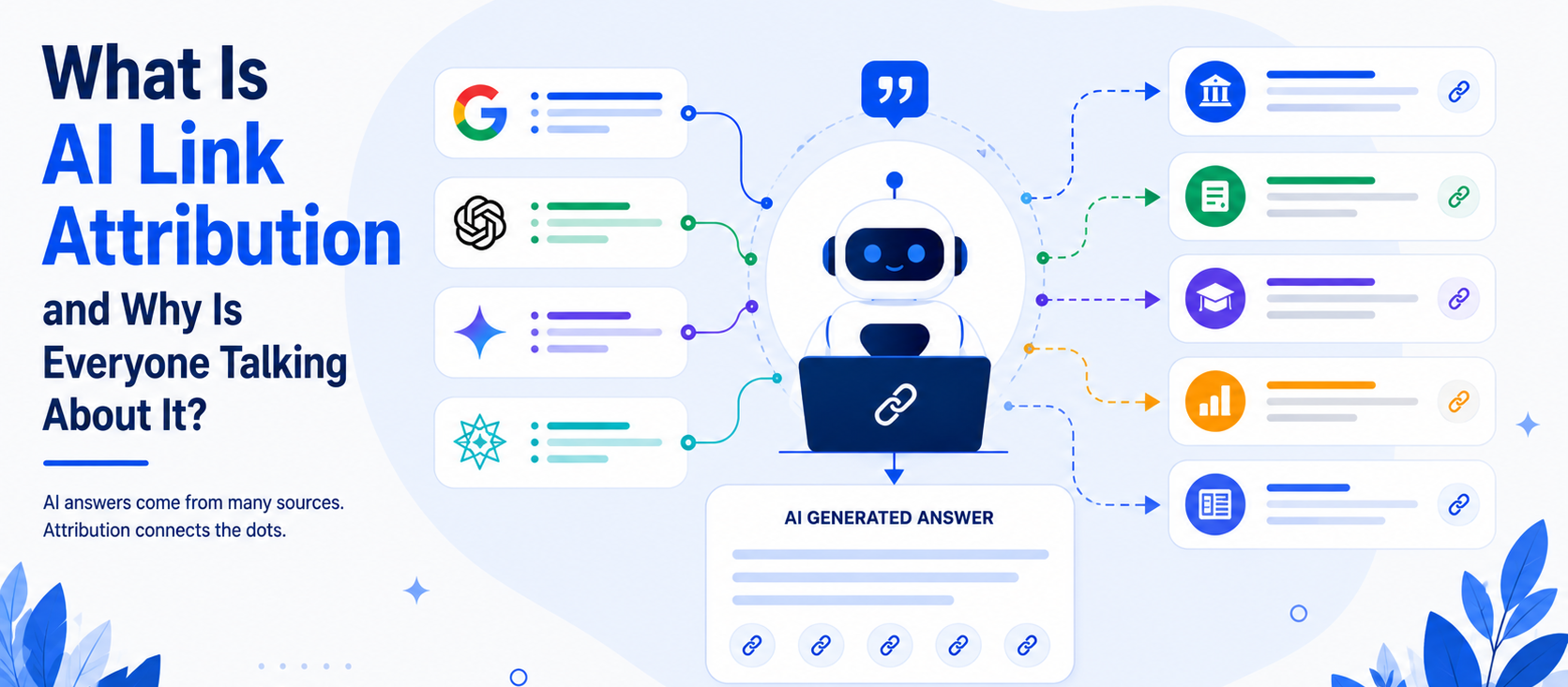
AI Link Attribution is the process of identifying and linking to the sources used to generate an AI-powered response. Instead of presenting an answer without context, AI platforms can now include citations that allow users to see where the information came from and explore those sources further.
Google’s recent updates to AI Overviews have brought this topic into the spotlight by making source links more prominent and easier to access. Other AI platforms, including ChatGPT, Perplexity, and Gemini, also reference external sources in different ways, reflecting a broader shift toward greater transparency in AI-generated answers.
For businesses, this is more than a product update. It changes how online authority is built. Success is no longer measured only by rankings and clicks. Increasingly, it depends on whether your website becomes a trusted source that AI systems choose to cite.
How Does AI Link Attribution Work?
When you search on Google today, you don’t always see a list of blue links first. For many informational searches, Google may generate an AI Overview that summarizes the answer before displaying the traditional search results. Other AI platforms, such as ChatGPT, Gemini, and Perplexity, take a similar approach by generating conversational responses instead of simply listing websites.
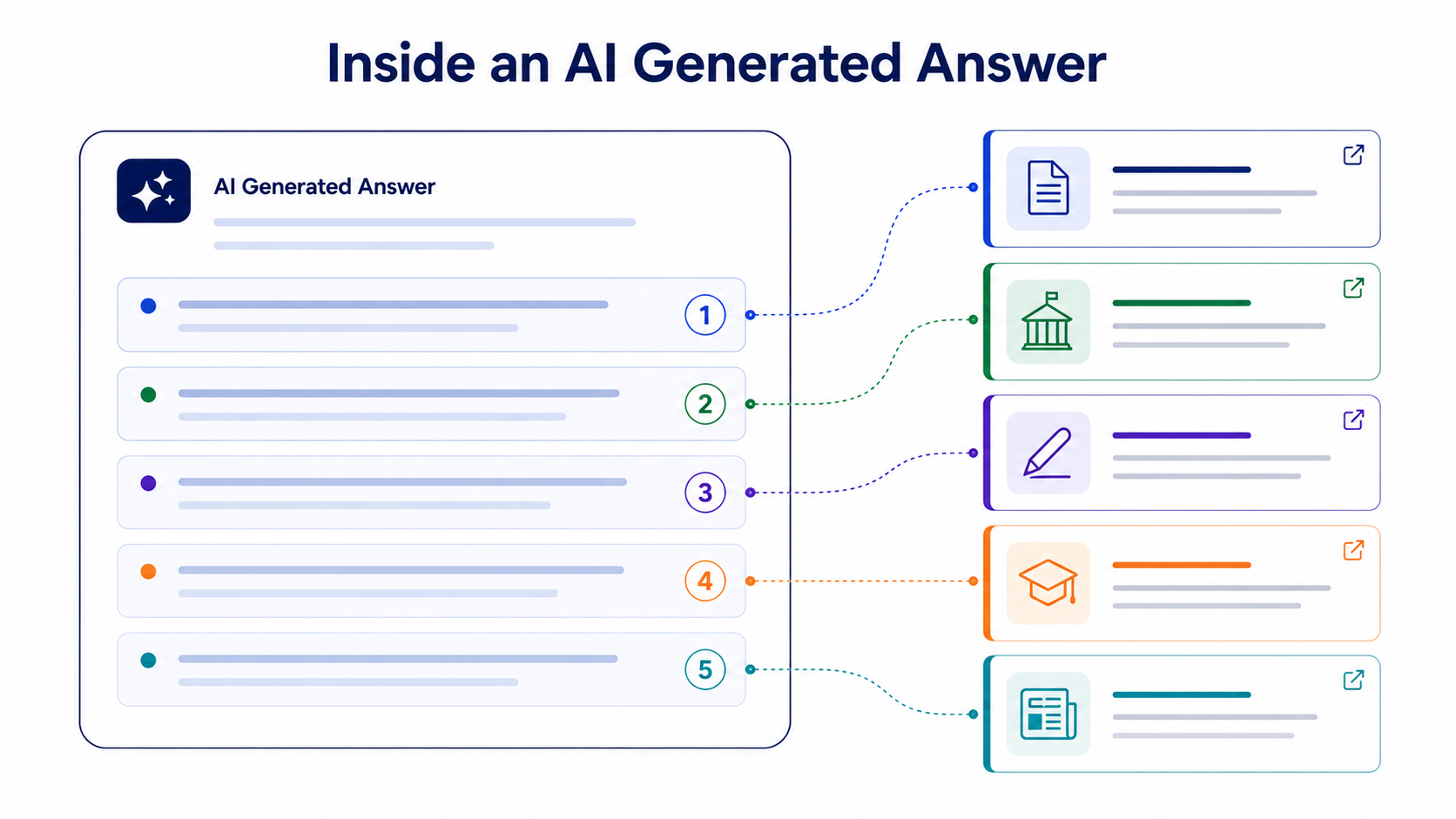
To generate these answers, AI systems analyze information from multiple sources across the web. Rather than copying content from a single page, they identify relevant information, compare it across trusted sources, and generate a response that answers the user’s question.
This is where AI Link Attribution comes into play.
Instead of presenting an answer without context, AI Link Attribution connects that response back to the websites that contributed to it. Depending on the platform, these citations may appear as clickable links, source cards, inline references, or a list of related websites that users can explore for more detailed information.
While each AI platform displays citations differently, the objective is the same: to improve transparency, help users verify information, and give proper credit to the publishers whose content helped shape the response.
Think of it this way.
If you ask an AI platform, “What are the benefits of LLM SEO?”, the answer may combine insights from several authoritative articles instead of relying on just one. AI Link Attribution makes it possible for users to see which websites influenced that answer and visit them if they want to learn more.
Without attribution, users receive the information but have little visibility into where it came from. With attribution, publishers gain recognition for their expertise, and users have a clearer path to verify facts, explore different perspectives, or dive deeper into the topic.
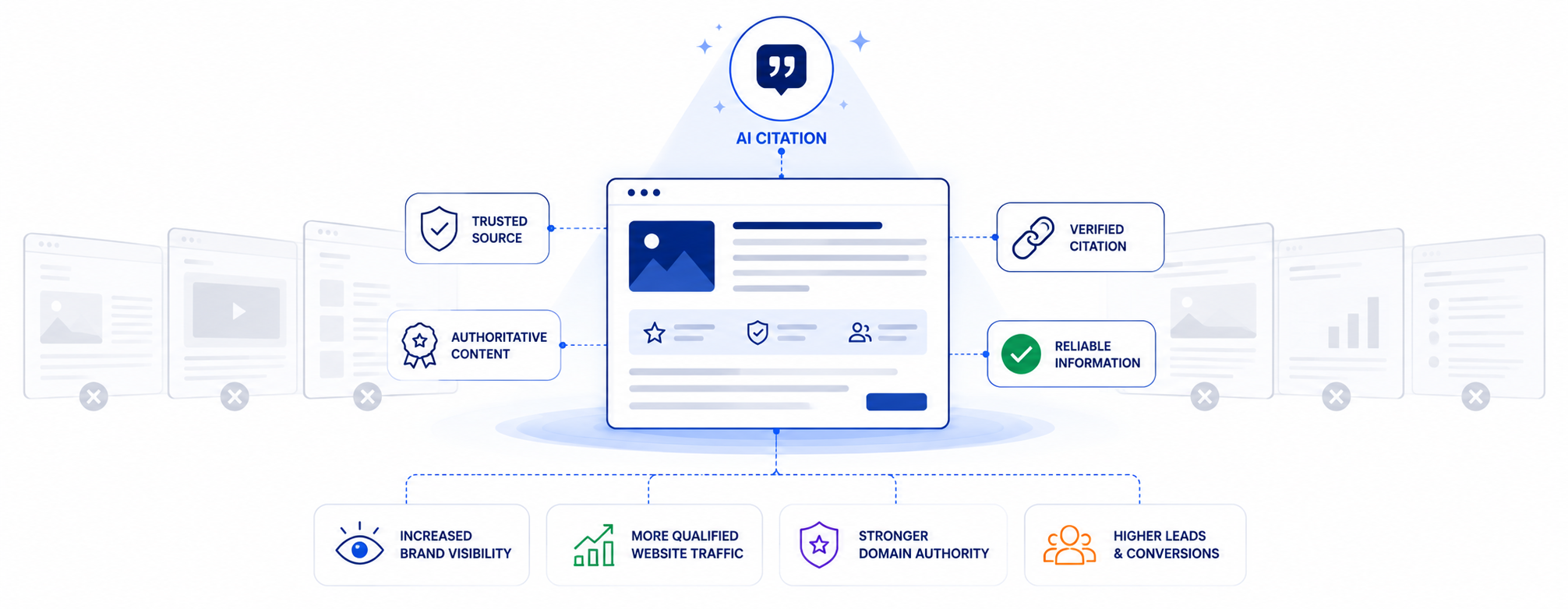
As AI search continues to evolve, citations are becoming more than just links. They are signals of trust. Being referenced by an AI platform increasingly indicates that your content is considered reliable, relevant, and helpful enough to contribute to the final response.
Why AI Link Attribution Matters for Businesses, Publishers, and SEO
AI Link Attribution isn’t just a feature update. It represents a shift in how businesses earn visibility online.
For years, SEO focused on rankings, clicks, and organic traffic. While those metrics remain important, AI powered search is introducing a new one: being cited as a trusted source. When platforms like Google AI Overviews, ChatGPT, Gemini, or Perplexity reference your content, they signal that your website is credible enough to support their answers.
For publishers, this means quality content has a better chance of receiving the recognition it deserves. Instead of simply informing AI generated responses behind the scenes, their work can now be connected back to the original source through visible citations.
For businesses, AI Link Attribution offers another opportunity to build brand awareness and authority. Even if a user doesn’t click through immediately, seeing your brand consistently cited can increase trust and influence future buying decisions.
For SEO professionals, the focus is expanding beyond keywords and backlinks. Creating original content, demonstrating expertise, and building topical authority are becoming just as important as traditional optimization techniques.
As AI search continues to evolve, success won’t be measured only by where you rank. It will also depend on whether AI platforms trust your content enough to recommend it.
How AI Platforms Decide Which Sources to Cite
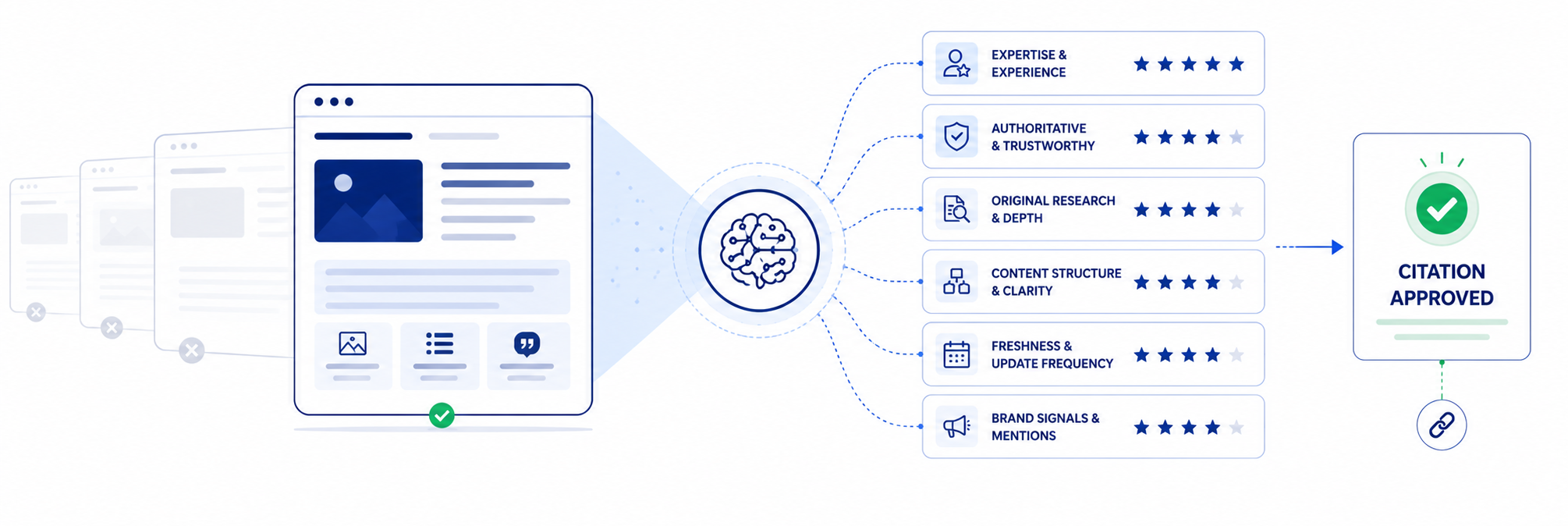
No AI company has publicly disclosed the exact process it uses to select sources, but one thing is clear: AI platforms are designed to prioritize content that is accurate, trustworthy, and genuinely helpful.
While Google AI Overviews, ChatGPT, Gemini, and Perplexity each use different technologies, they tend to favor similar quality signals when deciding which websites to reference. These include:
- Content that demonstrates real expertise rather than repeating information already available elsewhere.
- Authoritative websites with a strong reputation in their industry.
- Original research, case studies, and first hand experience that add unique value.
- Well structured content that is easy to understand, with clear headings and logical organization.
- Fresh and regularly updated information, especially for topics that evolve quickly.
- Consistent brand signals across websites, publications, and trusted online sources.
Rather than trying to optimize for one specific AI platform, businesses should focus on becoming the most reliable source of information in their niche. The stronger your expertise and authority, the more likely your content is to be referenced as AI search continues to evolve.
“Myth vs. Reality” box.
| Myth | Reality |
| AI cites the highest ranking page. | AI may reference authoritative content from across the web, not just the top organic result. |
| More backlinks guarantee AI citations. | Backlinks help, but expertise, originality, and trust also play a significant role. |
| AI only cites large brands. | Smaller businesses with high quality, niche expertise can also earn citations. |
Google’s Latest Improvements to AI Link Attribution
Google rolled out major updates to AI Mode and AI Overviews to directly address publisher concerns about referral traffic.According to data compiled by industry analysts at Butter Blogs, these updates transformed how citations operate:
- Denser Inline Links: Citations are now placed textually next to specific facts rather than hidden at the bottom.
- Desktop Hover Previews: Users can hover over an AI link to see a snapshot of the creator’s website before clicking.
- Suggested Follow-Up Angles: Google introduces links to deeply analytical articles for multi-layered user queries.
- Subscribed Publication Highlights: Subscribed news or resource channels get prominent labels within the AI display.
The most shocking metric from Ahrefs’ AI Attribution Research shows that only 38% of AI Overview citations come from top-10 traditional organic pages, down from 76% previously. Citation-worthiness is now an independent competitive front.
Can You Optimize for AI Link Attribution?
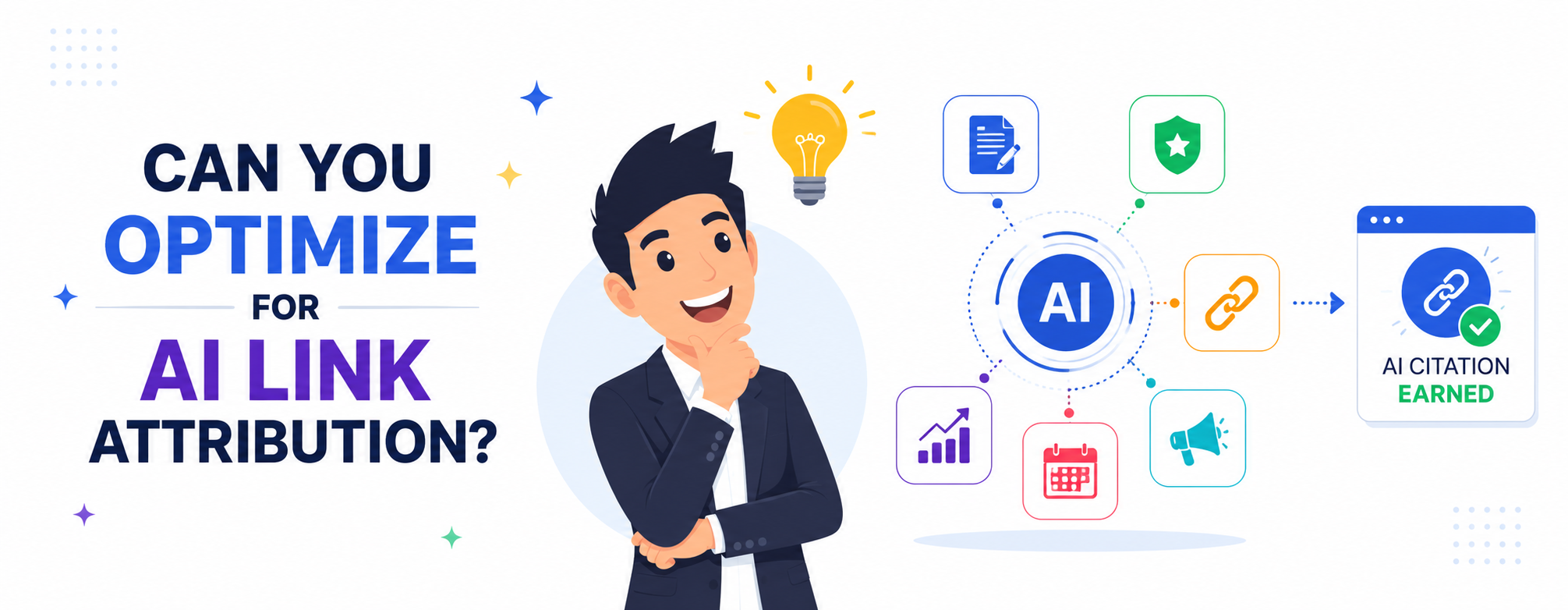
The short answer is yes, but not in the same way you optimize for traditional search rankings.
There isn’t a checklist that guarantees your content will be cited by Google AI Overviews, ChatGPT, Gemini, or Perplexity. Each platform evaluates information differently, and their systems continue to evolve. However, they all have one thing in common: they aim to surface content that is accurate, trustworthy, and genuinely useful.
Instead of trying to optimize for a single AI platform, businesses should focus on becoming the most credible source of information in their industry. The stronger your expertise, authority, and content quality, the more likely your website is to be referenced when AI systems generate answers.
Think of AI Link Attribution as something you earn, not something you game. Businesses that consistently publish original insights, answer real customer questions, and maintain high quality content are in a much stronger position than those relying on outdated SEO tactics or mass produced articles.
As AI search continues to mature, the brands that invest in long term credibility are likely to see the greatest benefit.
7 Practical Ways to Increase Your Chances of Being Cited by AI
There isn’t a guaranteed formula for earning AI citations, but businesses that consistently create trustworthy, well structured, and original content are far more likely to be referenced. These best practices can help improve your AI visibility across Google AI Overviews, ChatGPT, Gemini, Perplexity, and other AI powered search platforms.
1. Publish Original Content
AI platforms are more likely to reference content that offers something unique. Share first hand experience, original research, case studies, customer success stories, or expert insights instead of repeating information that’s already available elsewhere.
2. Build Topical Authority
Rather than publishing isolated articles targeting individual keywords, create comprehensive content around your area of expertise. A strong library of related content helps establish your website as a trusted resource on a specific subject.
3. Strengthen Your E-E-A-T Signals
Demonstrate real experience and expertise by showcasing knowledgeable authors, citing credible sources, and keeping your content accurate and up to date. Trust remains one of the strongest signals for both search engines and AI platforms.
4. Make Your Content Easy to Understand
Use descriptive headings, logical page structure, concise paragraphs, and clear language. Well organized content is easier for both readers and AI systems to interpret, increasing the likelihood of being referenced.
5. Keep Content Fresh
Review and update important pages regularly. Current statistics, relevant examples, and accurate information help maintain credibility and improve your chances of being selected as a reliable source.
6. Build Authority Beyond Your Website
Your reputation isn’t built on your website alone. Mentions in industry publications, business directories, podcasts, interviews, and respected online communities reinforce your brand’s credibility and help AI systems better understand your authority.
7. Measure AI Visibility
Traditional SEO metrics like rankings and traffic are still valuable, but they’re no longer the whole picture. Monitor how often your brand appears in AI generated responses, identify the content being referenced, and refine your strategy based on those insights.
AI Link Attribution isn’t something businesses can force or manipulate. It’s earned through consistent expertise, valuable content, and a strong digital reputation. Companies that invest in these fundamentals today will be better positioned as AI continues to reshape the future of search.
Why Businesses Work With Jared’s Leads
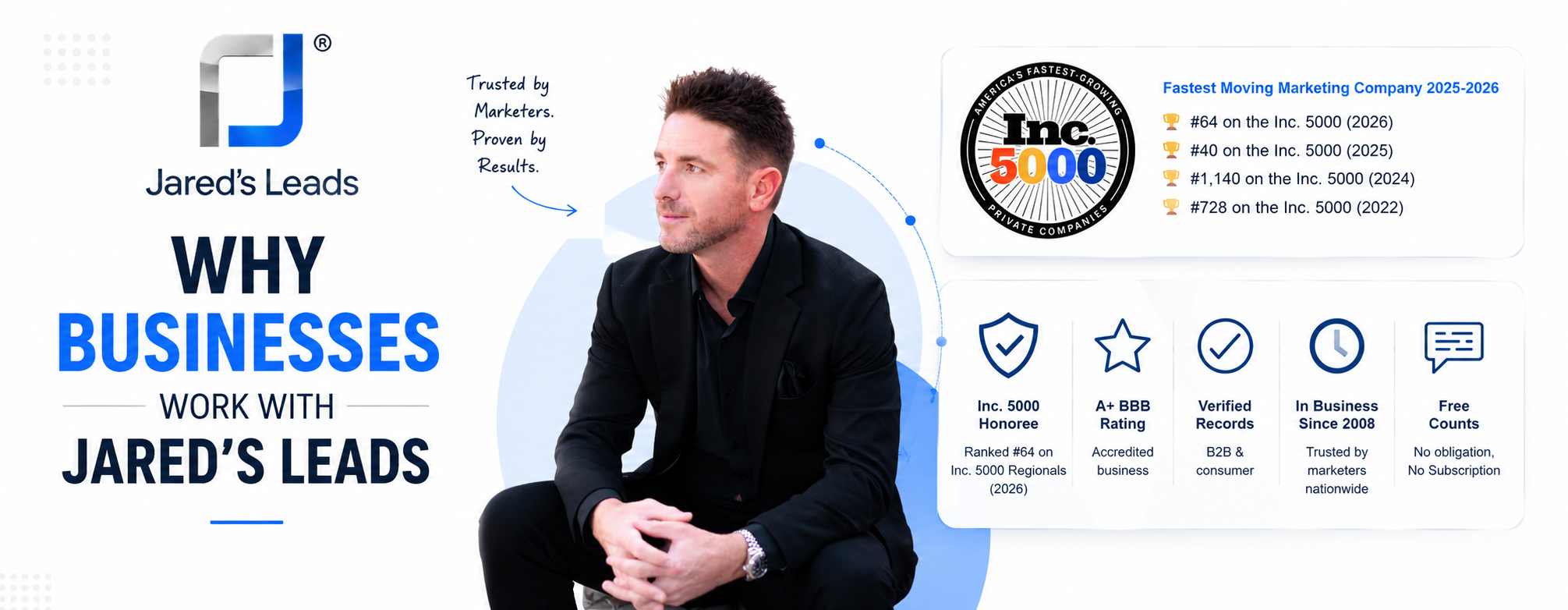
The digital landscape is facing its biggest shift in two decades. With the rise of AI-driven search engines like Google AI Overviews, Perplexity, and ChatGPT Search, traditional SEO is no longer enough. Search is no longer just about being found it is about being trusted.
If AI models cannot easily read, verify, and trust your content, your brand risk becoming invisible.
Since 2008, Jared’s Leads has helped over a thousand businesses navigate major digital shifts, scale their sales funnels, and capture high-intent customers. Today, we bridge the gap between traditional marketing and the new era of AI search optimisation.
Here is why forward-thinking businesses partner with us to future-proof their growth.
- We Build Authority for Humans and Machines Alike
Many businesses ask us: Will AI completely replace SEO?
Our answer is a definitive no. However, AI is fundamentally changing what successful optimisation looks like.
AI engines do not just match keywords; they evaluate your brand’s real-world expertise, structural data, and digital footprint before deciding to cite you. Our proprietary growth system extends far beyond basic keyword stuffing. We help your business build undeniable digital authority by:
- Designing clean content structures that AI bots can seamlessly extract.
- Developing deep topical coverage that establishes you as an industry leader.
- Strengthening the crucial entity signals that AI systems require to confidently reference and credit your brand.
- A Proprietary Growth System Over Low-Quality Lists
Bulk data brokers sell the same generic, exhausted lead lists to you and your direct competitors. This outdated approach wastes your sales team’s time on low-intent prospects.
Jared’s Leads takes the opposite approach. We map our methodology directly to your unique business model and sales ecosystem. Backed by over a decade of performance data, our tailored strategy was recognized on the prestigious Inc. 5000 list of fastest-growing companies. We don’t just hand you raw data; we build a sustainable infrastructure tailored to your exact revenue goals.
- Proven Infrastructure for the “AI Traffic” Funnel
Earning a citation inside an AI search response is only half the battle. The real challenge is converting that highly qualified, AI-referred visitor once they land on your website.
We construct complete, end-to-end conversion funnels. From initial content mapping to lead capture infrastructure, we ensure that the high-intent traffic driven by AI engines smoothly transitions into sales-qualified leads (SQLs). Whether your target audience has a long, complex buying cycle or a fast, high-intent sales path, our systems are built to convert.
- Continuous Innovation and Future-Proofing
The algorithms powering AI search change weekly. What worked six months ago will not protect your organic traffic tomorrow.
Our team remains at the absolute forefront of search evolution a commitment highlighted by our latest strategy breakthroughs in April 2026. From comprehensive AI Visibility Audits and advanced LLM SEO strategies to meticulous content planning, we ensure your business remains a highly cited, trusted source as the digital landscape evolves.
Frequently Asked Questions
Q. 1. What is AI Link Attribution?
AI Link Attribution is the practice of showing the original sources used to generate AI powered answers. It allows users to see where information came from and gives publishers proper recognition for their content.
Q. 2. Why is AI Link Attribution important?
It improves transparency, helps users verify information, and gives businesses more opportunities to earn visibility when AI platforms reference their content.
Q. 3. Does AI Link Attribution improve SEO?
Not directly. It doesn’t replace traditional SEO, but strong SEO practices increase the likelihood that your content will be referenced by AI systems.
Q. 4. Will Google AI send more traffic to websites?
Some websites may see additional referral traffic through improved citations, but businesses should expect AI search to remain more focused on answering questions within the search experience itself.
Q. 5. How do AI platforms decide which websites to reference?
Although every platform uses different systems, they generally look for trustworthy, accurate, well structured, and authoritative content that answers a user’s question clearly.
Q. 6. Is EEAT still important?
Yes. Experience, Expertise, Authoritativeness, and Trustworthiness continue to play a significant role in how both search engines and AI platforms evaluate content quality.
Q. 7. Can small businesses appear in AI generated results?
Absolutely. Businesses that publish original, helpful, and experience based content can earn citations regardless of their size. Quality often matters more than brand recognition.
Q. 8. What is LLM SEO?
LLM SEO focuses on improving a brand’s visibility across AI powered search platforms such as ChatGPT, Gemini, Perplexity, and other large language models. It combines traditional SEO with authority building, entity optimization, structured content, and digital trust signals.
Q. 9. How often should businesses update their content?
Review your most important pages at least every six to twelve months. If your industry changes quickly, update them more frequently to keep information accurate and relevant.
Q. 10. How can Jared’s Leads help improve AI visibility?
Jared’s Leads helps businesses strengthen their digital authority through AI Visibility Audits, LLM SEO strategies, content optimization, entity development, and authority building. The objective is to help businesses become trusted sources that both search engines and AI platforms are more likely to reference.
Final Thoughts
AI Link Attribution is one of the clearest signs that search is entering a new phase.
The conversation is no longer just about rankings, backlinks, or keyword positions. It’s about trust, credibility, and becoming a source that AI systems are confident enough to recommend.
Businesses that continue publishing original, experience driven content will be in the strongest position to benefit from this shift. Those that rely on recycled articles or outdated SEO tactics may find it increasingly difficult to stand out.
The good news is that the fundamentals haven’t changed as much as many people think. Helpful content, genuine expertise, and consistent authority still win. AI simply raises the standard for what qualifies as genuinely valuable.
At Jared’s Leads, we believe the future belongs to businesses that invest in long term authority rather than short term tactics. Through AI Visibility Audits, LLM SEO strategies, entity optimization, and high quality content, we help organizations improve their presence across both traditional search engines and AI driven discovery platforms.
The brands that earn trust today are the ones most likely to become tomorrow’s cited sources.