Key Takeaways
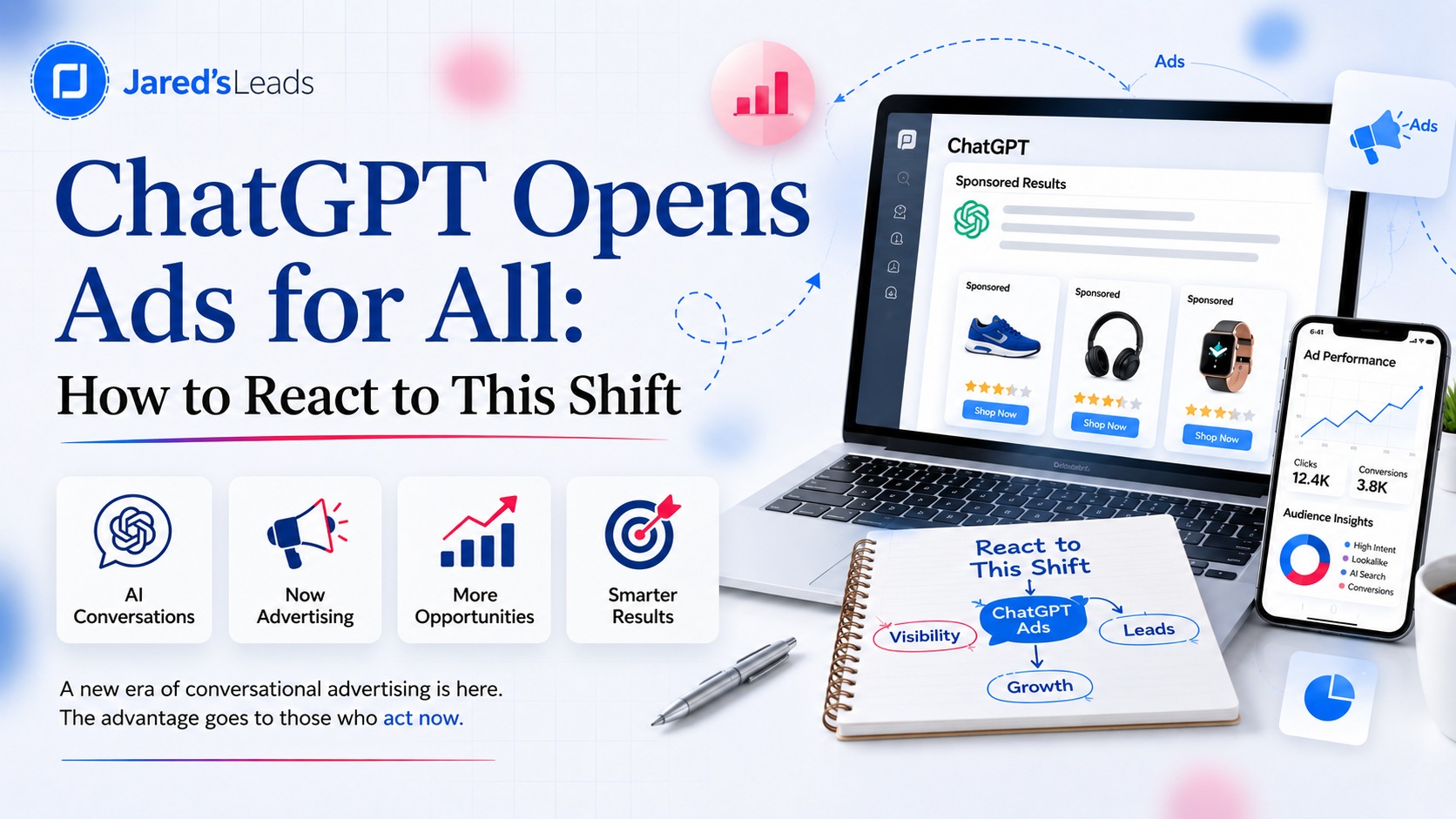
- Self-Serve ‘Ads Manager’ from OpenAI launched in May 2026. Allowing any business to spend any amount on ChatGPT ads since the previous minimum spend of $50,000 was removed.
- ChatGPT now has 800 million weekly active users and processes billions of prompts daily.
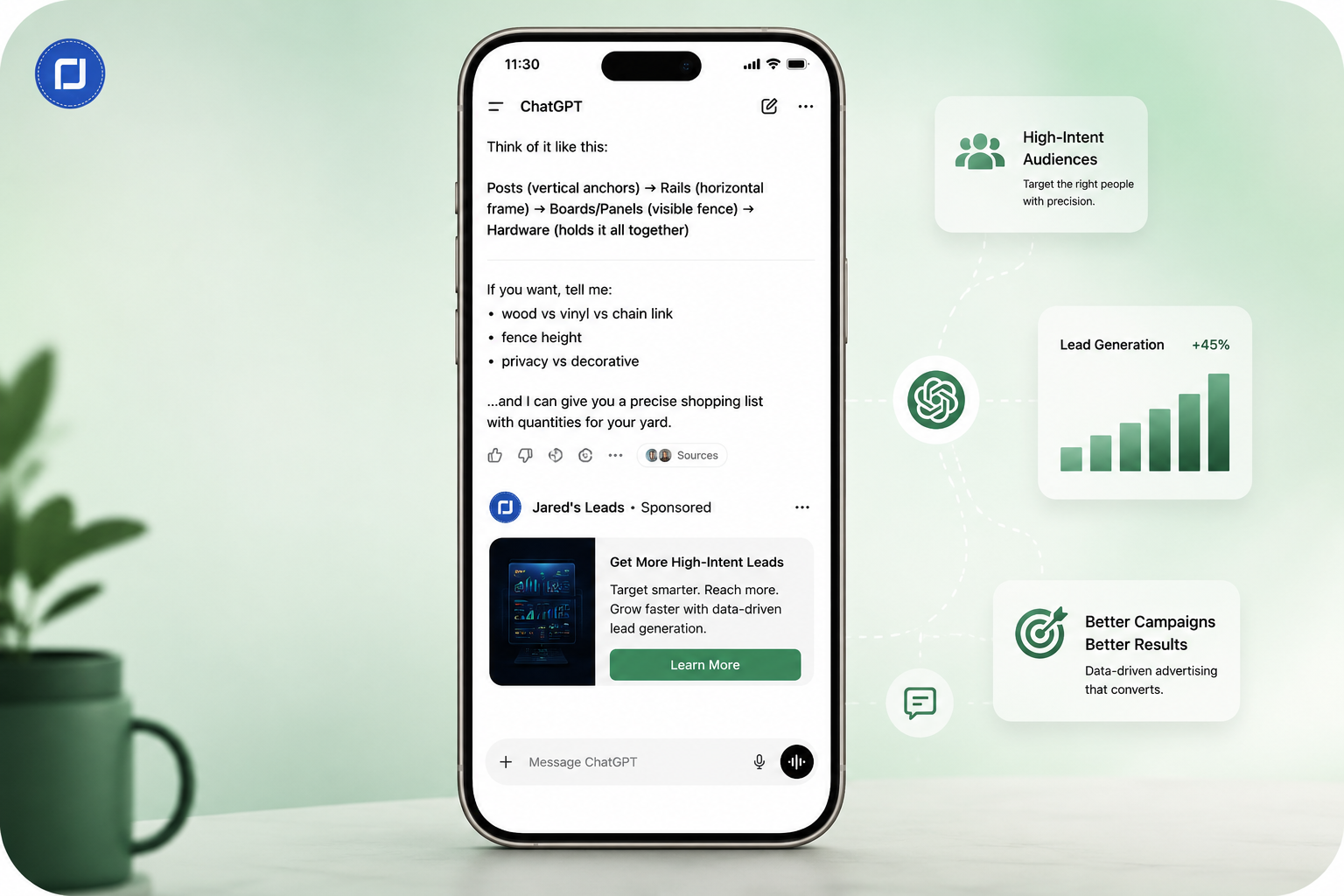
- Ads appear underneath AI-generated responses, and since OpenAI holds the rights to the AI’s wording, they remain clearly labeled as sponsored and never affect the AI’s wording.
- The current ad formats are a product carousel that supports shoppable ads and a banner ad that includes an “Ask ChatGPT about this ad” button. Both formats are designed to appeal to buyers who have made it to the decision stage of the purchasing funnel.
- Healthcare, wellness, professional services, and high-ticket items are ads that will likely perform well, as their customers are likely to engage in decision-making research.
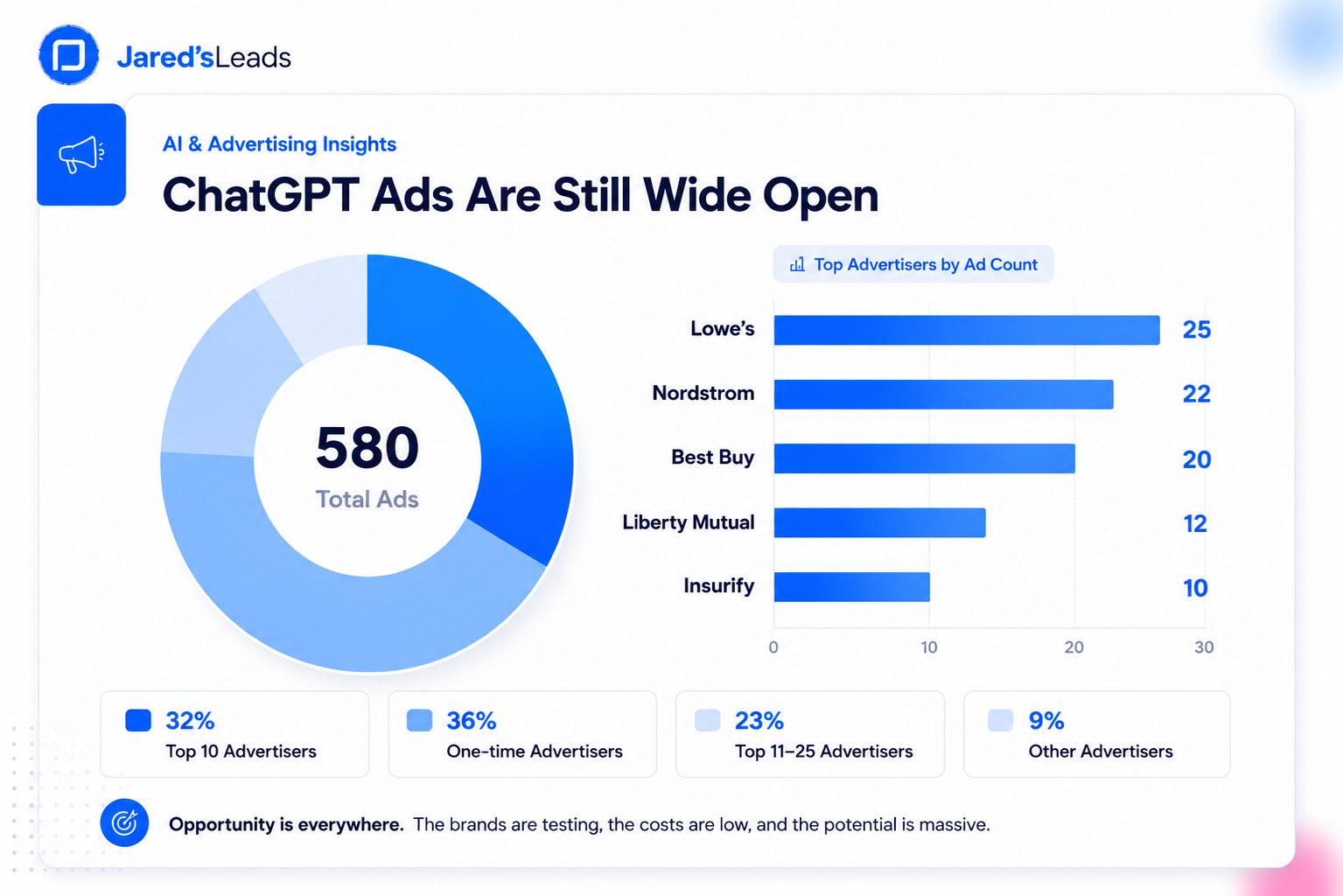
- The ad auctions are currently low-pressure. They are expected to have the opposite effect in the future, making an early-mover advantage time-sensitive.
The Numbers behind the Launch
ChatGPT generated over $100 million in annual ad revenue six weeks after launching the ads, even though ads were displayed to less than 20% of users. Revenue generation is expected to grow substantially from the ads displayed to 85% of Free and Go tier users.
Any business in the U.S. can now set their own budget and launch ads on ChatGPT without hiring an advertising agency, as the minimum spend has been removed. OpenAI has added CPC and CPM bidding options, as well as conversion tracking, ChatGPT Ads pixels, and measurement attribution, which allows businesses to move from the ad platform as a brand awareness channel to a fully accountable lead generation channel.
Geographic rollout is happening in Canada, Australia, New Zealand, the UK, Japan, South Korea, Brazil, and Mexico. International businesses must have a market entry strategy for those countries first, to build brand equity before the competition arrives.
Why This Channel Behaves Differently
ChatGPT is built around conversations, not questions. Users come with a problem and ask follow up questions, refine, and narrow down over many sessions that can last days. By the time an ad is displayed, the AI has done the majority of the “education,” and the user is much further along the decision-making process, not at the beginning.
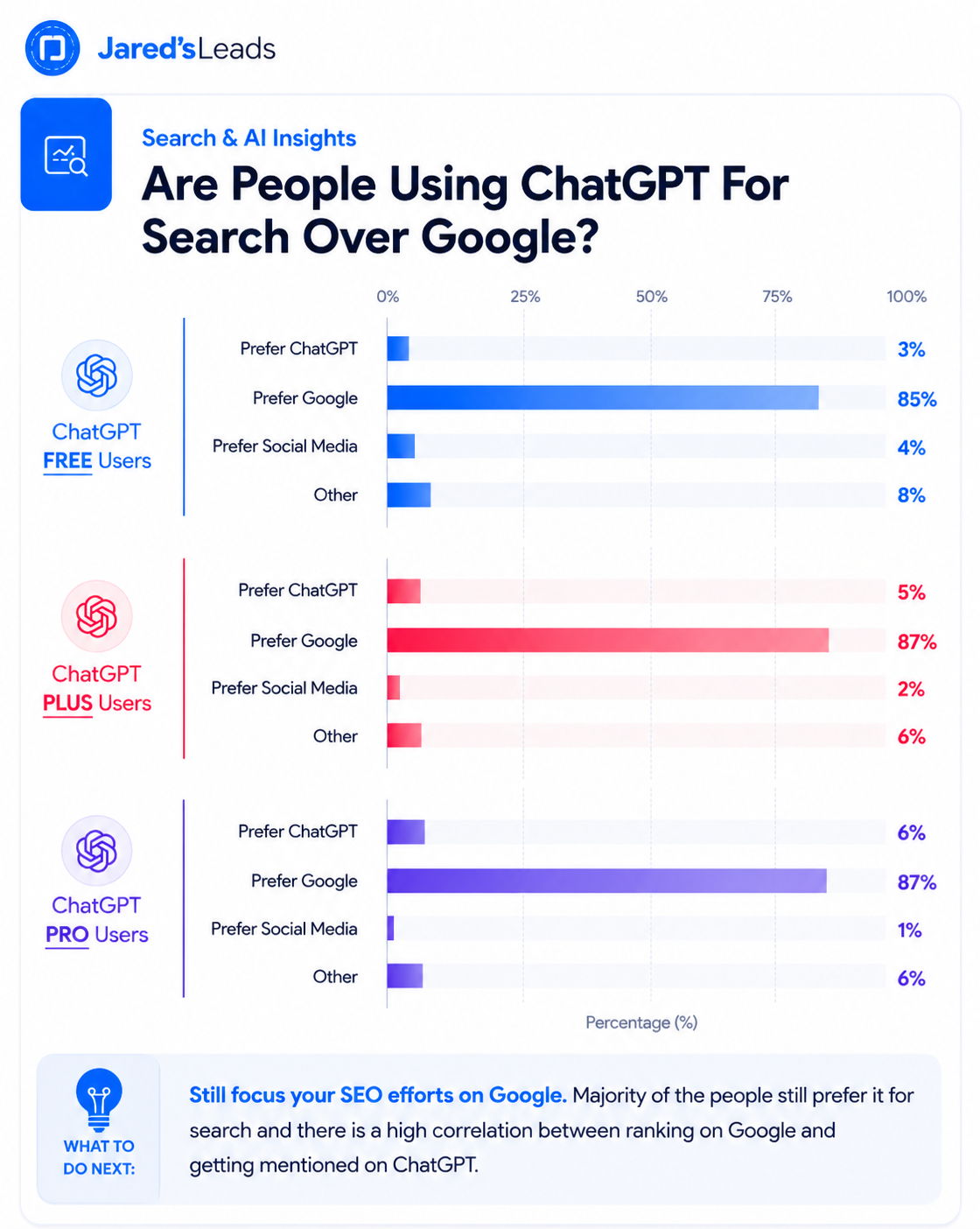
Targeting operates based on the ongoing conversation, the history of the chat and previous ad interactions, not keywords and demographics. Less than 7 percent of ads are rated low-relevance by users, and early pilot data showed no significant decrease to consumers’ trust. The bottom line is: advertising that is built for and around early-to-mid-funnel user engagement will be the biggest opportunity. Move users towards the state of their decision, not the beginning.
The Two Ad Formats
Shoppable Product Carousel — highly visual ads that are easy to engage with and offer a short path to purchase, particularly ideal when many options can be compared for price and features.
Conversational Banner — includes a call to action and a “Ask ChatGPT about this ad” button. Clicking the button opens a chat that is fueled by ad sponsor content (FAQs, pricing, and objections) and allows ChatGPT to respond on behalf of the sponsor. This ad format is most important in areas that require a high level of trust to convert such as healthcare and high cost services.
OpenAI claims that advertisements do not influence ChatGPT’s responses, and both formats remain visually distinct from unsolicited responses.
Where are the Most Obvious Early Opportunities?
The strongest early matches lie in the following categories where customers typically research and compare different options before making a decision:
- Healthcare — patients that research healthcare providers or treatment options are exactly the type of multi-session researchers that this channel is focused on.
- Wellness — clear AI literacy with individuals comparing competing options within a highly variable supplement/program marketplace.
- Professional services (legal, financial, consulting, coaching) — clients making high-stakes, long-term decisions.
- B2B software, education, travel — decision makers that research and/or validate multiple options.
An example of an initial focus: using ChatGPT to determine highly relevant category of user questions and building creative and FAQ content to serve that demand while competitive occupancy is low.
How Should Businesses Respond?
- Create messaging for decision-stage buyers’
Broad, top-of-funnel messaging often misses the intent behind a user’s search. Focus your messaging around the specific problem the customer is trying to solve and clearly guide them toward the next action. - Build destination pages for informed prospects
When users arrive after researching a specific problem, a generic landing page creates friction. Create pages that directly address their questions, concerns, and buying considerations. - Make conversational experiences dynamic and useful
A generic banner or surface-level content won’t move users forward. Create experiences that respond to customer intent, answer real questions, and provide relevant next steps. - Start early and build the advantage
Self-serve AI capabilities are still new, and many businesses are only beginning to collect meaningful data. The insights gained over the next 6–12 months can become a competitive advantage that others cannot easily replicate.
The Bigger Picture
The early adopters of Google AdWords and Facebook Ads built marketing funnels that became extremely difficult for their competitors to replicate. ChatGPT is now processing 2.5 billion requests every day from 800 million users. OpenAI is projecting $2.5 billion in ad revenue for 2026. Most analysts believe that total AI-driven search advertising will reach $26 billion by 2029. Companies that are serious now will have the data and skills to dominate the market by the time the channel reaches full maturity. Those businesses that hold back will find that the cost to enter is significantly more.
How Jared’s Leads Can Lead Your Ad Campaign on ChatGPT
With no roadmap in ChatGPT advertising, businesses must develop their strategies regarding targeting, creative’s, and pre-loaded conversational content over time. Jared’s Leads was established to avoid these challenges. Founded by entrepreneur Jared Knapp in 2008, this company has over 18+ years of experience developing data-acquisition systems in businesses in relevant topics such as healthcare and professional services. Jared’s Leads has the knowledge to successfully integrate other businesses in those topics to this advertising platform.
How Jared Knapp’s Leads can help your business:
- Campaign development and advertising systems: We set up your self served ads through a structured account in ads manager. We determine your budget and set up your preferred bidding system along with the shoppable carousel or conversational advertising banner, based on what will best help your sales cycle.
- Conversational advertising banner content: We design content for the pre-loaded FAQs and pricing that converts and may be also useful for the ad engagement tool called “Ask Chat GPT about this ad.” We do this with the questions that your prospective clients actually have about your product service.
- Landing page integration: Unlike ads that are served through search engines or social platforms, traffic to Chat GPT ads are already educated on your product or service. We build landing pages that allow you to seamlessly continue the conversation with an already engaged potential client rather than forcing them to experience content on your home page.
- Targeting and creativity based on research-centric buyers: ChatGPT’s targeting mechanism functions based on conversational context as opposed to traditional keyword/demographic targeting. This necessitates probing into the actual lingual constructs of your industry segment users within ChatGPT and developing creative constructs around this. This process bears similarity to high intent keyword research, albeit in a contextually conversational format.
- Performance monitoring and campaign optimization: Cost per click (CPC)/Cost per thousand impressions (CPM) ad systems combined with conversion and attribution frameworks have been integrated into the advertising system. Early stage ad campaigns are treated as controlled experiments; we analyze which versions of the copy and creative constructs are driving the conversions and use this data to create increasingly optimized ads over the course of the campaign.
- Unique systems and exclusivity of design: Jared’s Leads differs from lead generation companies that sell the same lead lists to multiple competitors from the same sector. We are committed to constructing systems of growth that are exclusive to our clients and take into consideration the legal frameworks and market conditions that are especially relevant to the health and financial service sectors.
Why Businesses Trust Us
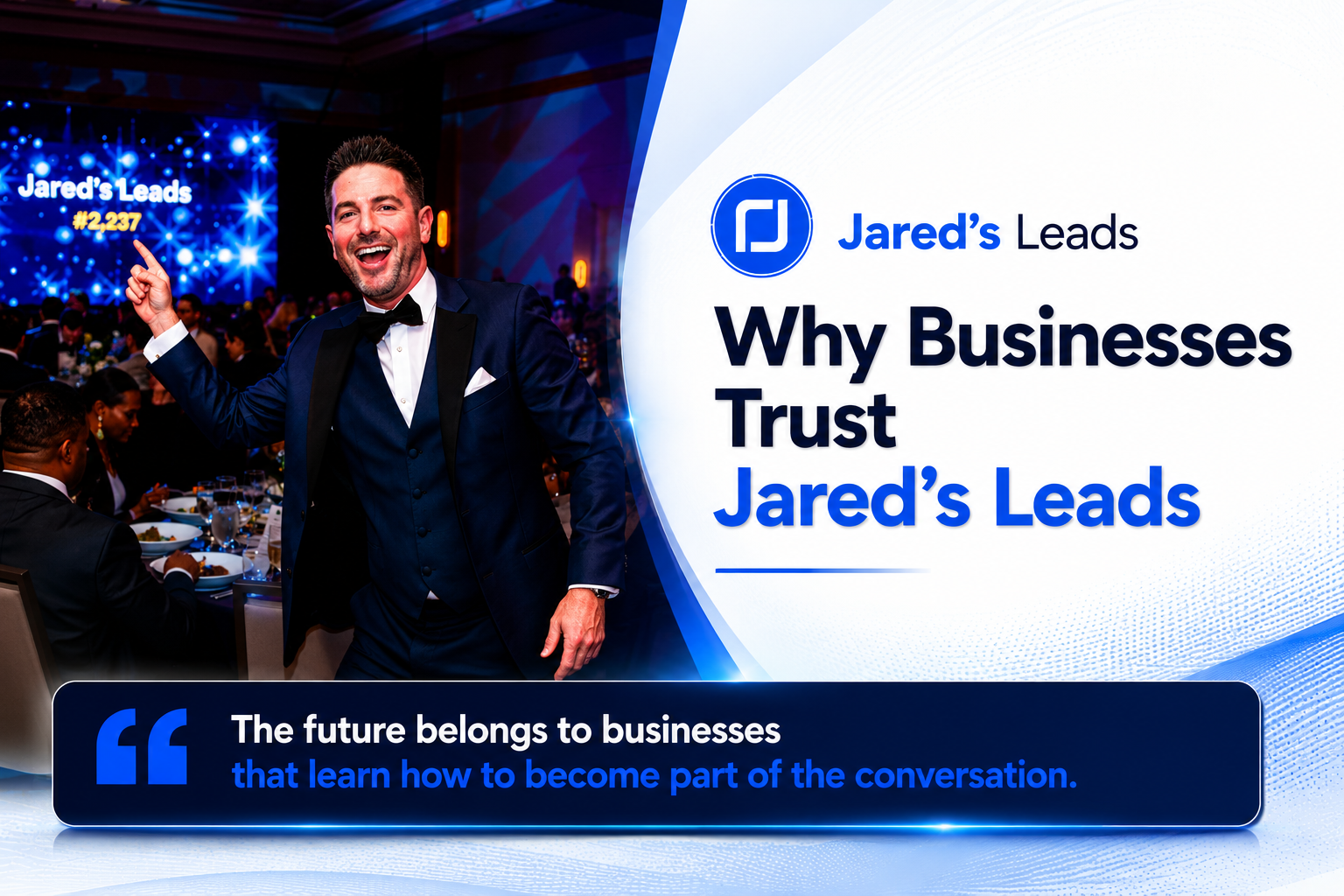
- We have 18 years of experience. Established in 2008 Jared’s Leads has directed its focus to facilitate client’s digital growth despite evolving paradigms in digital acquisition, from the forefront of search and social ads to AI-centric solutions. We have adapted our methods in an iterative fashion from the digital acquisition frameworks that we have relied upon most.
- Our systems are based on over a decade of tracking real time data and are validated. Performance systems are built on more than a decade of tracking and analyzing performance throughout the United States for our clients from a myriad of different industries.
- We have been included in the Inc. 5000 list multiple times. The growth systems that Jared’s Leads has built for our clients during the years of 2022, 2024, and 2025, have made it to the list of the fastest growing private companies of the year.
- Continued verified growth milestones. In April 2026, Jared’s Leads hit another important verified growth milestone — continued recent verified growth. This is a verified recent demonstration of performance, as opposed to a singular achievement from several years ago.
- Specialty within high-consideration industries. Specialized experience within healthcare, wellness, and high-ticket professional services. This is in contrast to general marketing experience. These are the same verticals that are most likely to benefit from ChatGPT’s conversational ad formats.
- Growth systems are unique by design. Growth systems are designed specifically for the client and are not sold again to businesses in the same market, preserving the compounding benefits of having first mover advantage with a new marketing channel.
FAQs
Do ChatGPT ads alter AI responses?
ChatGPT sponsored content is separate. Ads cannot impact AI responses. Private user requests will never be shown to advertisers. What is seen is aggregated user data and sponsored content performance.
Who sees ads on ChatGPT?
Logged in adult users of the free and the Go tier. Ads are not displayed to Pro, Business, Education, and Enterprise users.
How does targeting work?
Instead of demographics or keywords, it relies on contextual matching of current conversation topics, chat history, and ad clicks. For advertisers, this is a signal of intent stronger than any signal provided on traditional advertising channels.
What does this mean for my landing page?
The page should be a step beyond the generic homepage. It should solve the specific problem the user was looking to solve and provide a call to action. Anything less is a wasted advantage the ad provided.
Which businesses should focus on this?
Businesses in the healthcare, wellness, professional and business services, education, and high-ticket items categories will reap the highest rewards, because these businesses have customers with high research engagement prior to purchase.
Is it possible without a big budget?
Yes. The removal of the $50,000 minimum means just about any business can afford to test this target with a small test budget. In these early days, the focus is on learning the platform and gathering initial data to enhance performance, as opposed to achieving immediate return on advertising spend.
Conclusion
The first six weeks demonstrate how quickly self-serve advertising can gain traction generating the foundation for significant annualized revenue potential while reaching only a fraction of the available market.
The early-mover advantage is becoming clear, with businesses currently establishing benchmarks and shaping what success looks like in this emerging advertising model. By testing this approach now, businesses can identify their competitive position, gather valuable performance insights, and build an advantage before the market becomes more crowded.
Waiting too long means playing catch-up while competitors build experience, data, and stronger positioning.
With over 18 years of lead generation expertise, proprietary systems, and Inc. 5000 recognition, Jared’s Leads helps businesses strengthen their marketing performance and reach the opportunities they are positioned to win.
Getting started today is simple schedule your free competitive consultation and discover where your business stands.